








What's Happening?
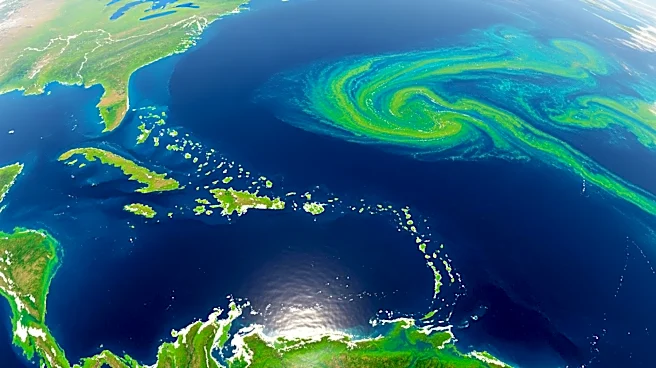
NASA's Plankton, Aerosol, Cloud, Ocean Ecosystem (PACE) satellite has captured a natural-color view of the Atlantic Ocean, revealing vibrant shades of green and milky blue from Norfolk to Cape Cod. These colors are attributed to phytoplankton blooms,
which are primary producers in the ocean ecosystem. The Ocean Color Instrument (OCI) on the PACE satellite observes ocean color in over 100 wavelengths, allowing it to detect these blooms and identify the species present. The satellite's data shows areas with higher levels of chlorophyll, indicating significant phytoplankton activity. This development marks the arrival of meteorological spring in the Northern Hemisphere, particularly off the northeastern coast of the United States.
Why It's Important?
Phytoplankton are crucial to marine ecosystems as they serve as a primary food source and play a significant role in carbon recycling. The blooms captured by NASA's satellite indicate healthy oceanic conditions, which are vital for supporting marine life. Understanding phytoplankton dynamics can help scientists monitor ocean health and predict changes in marine biodiversity. Additionally, these observations contribute to climate research, as phytoplankton influence global carbon cycles. The data collected by the PACE satellite aids in tracking environmental changes and supports efforts to address climate-related challenges.