








What's Happening?
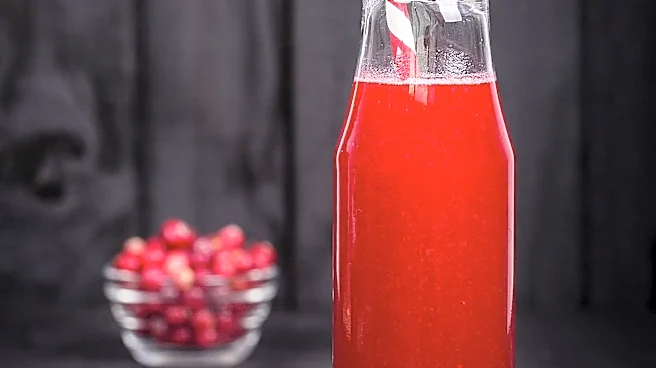
A new laboratory and animal study, published in the journal AMB Express, investigated the efficacy of a cranberry extract against multi-resistant hospital bacteria, including MRSA, and the fungus Candida albicans. The study found that the cranberry extract inhibited
the growth of multi-resistant bacteria in the laboratory, with the strongest effects observed against gram-positive bacteria like MRSA. Crucially, at low concentrations, the extract reduced the formation of biofilm by up to 75-80 percent. Biofilms are protective layers formed by bacteria that make them significantly more tolerant to antibiotics and immune cells. In experiments with rats infected with multidrug-resistant E. coli, all five rats treated with cranberry extract survived, compared to three out of five in the untreated group, and inflammatory markers were lower in the treated group.
Why It's Important?
Antibiotic resistance is a major global health threat, with resistant bacteria contributing to millions of deaths worldwide. The ability of bacteria to form biofilms is a significant factor in their resistance, as these structures shield them from antibiotics and immune responses. This study's findings are important because they suggest a potential new strategy to combat resistant infections by targeting biofilm formation rather than directly killing bacteria. This approach could reduce the selective pressure for resistance development, offering a complementary or alternative method to traditional antibiotics. If substances from cranberries can weaken bacteria's ability to cooperate and form protective biofilms, it could lead to novel preventive measures or adjunct therapies, particularly for infections where biofilms are prevalent, such as urinary tract infections, chronic wounds, and around implants.
What's Next?
While the study shows promising results, it primarily demonstrates that cranberry extract prevents biofilm formation rather than breaking down established biofilms. Further research is needed to determine if these findings can be translated into human applications. The study used a specific laboratory extract, not commercially available cranberry juice or capsules, and the concentrations tested in vitro do not directly translate to in vivo doses. Future steps include pharmacokinetic and clinical studies to understand how cranberry compounds are absorbed and distributed in the body and their efficacy in human subjects. Researchers will need to identify optimal dosages and formulations for human use and investigate whether cranberry-derived substances can be effectively integrated into treatment or prevention strategies for antibiotic-resistant infections.
Beyond the Headlines
The study highlights a broader shift in antimicrobial research towards strategies that interfere with bacterial virulence and cooperation rather than solely focusing on bactericidal effects. This approach, often termed 'anti-virulence' therapy, aims to disarm pathogens without necessarily killing them, thereby reducing the evolutionary pressure for resistance. The use of natural compounds like those found in cranberries also opens avenues for exploring botanical medicine as a source of novel antimicrobial agents. Ethically, this research aligns with the need for sustainable solutions to the antibiotic crisis, moving beyond the cycle of developing new antibiotics only to see resistance emerge. Culturally, it may also reinforce the perception of natural remedies having a role in health, though rigorous scientific validation remains paramount to distinguish effective treatments from traditional beliefs.