



What's Happening?
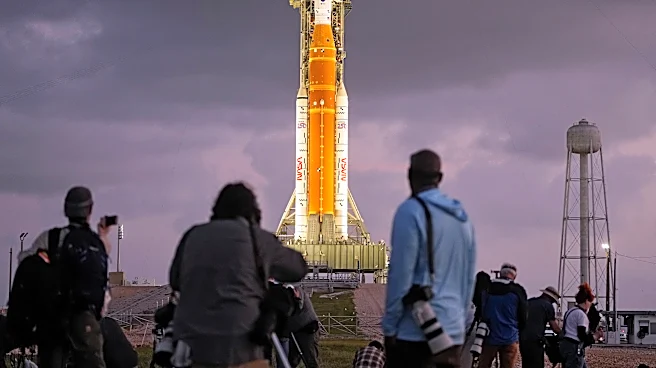
NASA is taking measures to protect the Artemis II astronauts from potential space weather threats during their upcoming mission to the moon. The crew will face various hazards, including radiation exposure, as they travel beyond low-Earth orbit, leaving
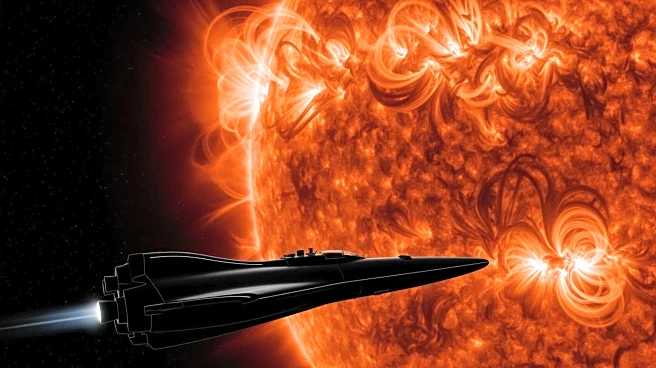
the protection of Earth's magnetic field. NASA is monitoring space weather conditions closely, especially after a recent X-class solar flare and subsequent coronal mass ejection (CME). The Artemis II mission, set to launch on April 1, will expose astronauts to different types of radiation, including galactic cosmic rays and solar energetic particles. NASA has contingency plans in place, including constructing a 'shelter' within the Orion capsule to protect astronauts from potent solar outbursts.
Why It's Important?
The Artemis II mission marks a significant step in human space exploration, as it will be the first crewed mission to travel beyond low-Earth orbit in decades. Ensuring the safety of astronauts from space weather threats is crucial for the success of the mission and future deep-space endeavors. NASA's preparations highlight the importance of radiation monitoring and space weather awareness in protecting astronauts' health. The mission's success could pave the way for future lunar landings and the establishment of a moon base, advancing scientific research and exploration capabilities.