







What's Happening?
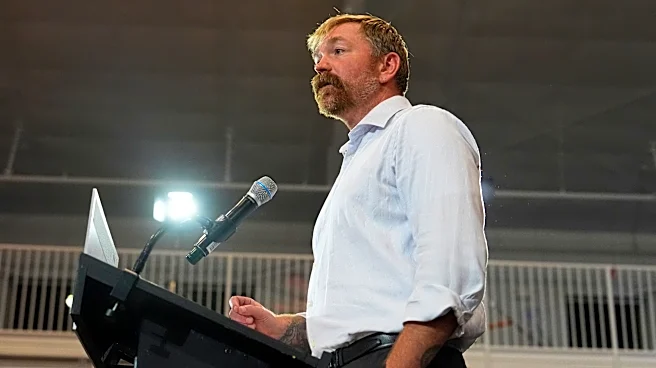
Graham Platner, a Democratic candidate for the U.S. Senate from Maine, is embroiled in controversy following allegations of rape. Platner is reportedly refusing to withdraw from the race unless he can approve his successor, a move that has put the Democratic Party
in a difficult position. The deadline for Platner to withdraw and be replaced on the ballot is approaching, according to state election law. Platner's campaign, led by strategist Morris Katz, is deliberating on the conditions for his withdrawal. Vermont independent Bernie Sanders, a major supporter of Platner, is advocating for former Maine Senate President Troy Jackson to replace Platner. The situation has led to significant political maneuvering, with other potential candidates like Maine Secretary of State Shenna Bellows and former CDC Director Nirav Shah being considered. The Democratic Senatorial Campaign Committee has announced it will not invest in the race if Platner remains a candidate.
Why It's Important?
The controversy surrounding Graham Platner's candidacy highlights the challenges political parties face in managing candidate vetting and maintaining public trust. The allegations against Platner and his subsequent demands have put the Democratic Party in a precarious position, potentially affecting their chances of regaining control of the Senate. The situation underscores the importance of thorough vetting processes and the potential consequences of failing to address allegations of misconduct promptly. The outcome of this situation could influence future party strategies and candidate selections, as well as impact voter perceptions and trust in the political process.
What's Next?
As the deadline for Platner's withdrawal approaches, the Democratic Party must decide how to handle the situation. If Platner does not withdraw, the party risks losing a key opportunity to challenge Republican Senator Susan Collins. The potential replacement candidates, including Troy Jackson, Shenna Bellows, and Nirav Shah, may need to prepare for a rapid transition if Platner steps aside. The party's response to this controversy could set a precedent for handling similar situations in the future, affecting party unity and electoral strategy.