
What's Happening?
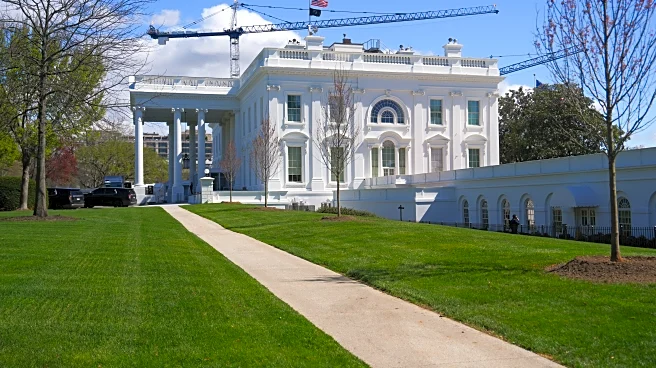
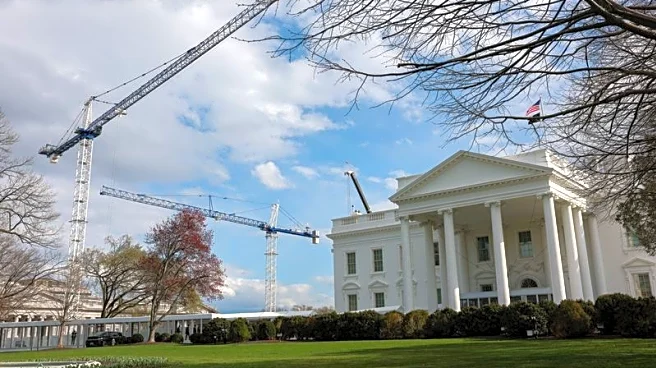
A federal judge in Washington, DC, has ordered the halt of construction on President Trump's proposed ballroom at the White House. The decision, issued by Judge Richard J. Leon, emphasizes that the President does not have the authority to build the ballroom using
private funds without congressional approval. The ruling cites the US Constitution, specifically the Property Clause, the Appropriations Clause, and the District Clause, which establish Congress's control over federal property and spending. The National Trust for Historic Preservation, which filed a lawsuit against the Trump administration, welcomed the decision, viewing it as a victory for preserving the integrity of the White House. The ruling comes ahead of a planned meeting of the National Capital Planning Commission, where the project was expected to clear its final administrative hurdle.
Why It's Important?
The ruling underscores the constitutional limits on presidential authority regarding federal property and spending. It highlights the importance of congressional oversight in maintaining the balance of power between the branches of government. The decision is significant for historic preservation advocates, as it protects the White House from unauthorized alterations that could impact its historical value. The case also sets a precedent for how future administrations might approach modifications to federal properties, ensuring that such actions are subject to legislative scrutiny. The halt in construction may also influence public perception of presidential powers and the role of Congress in safeguarding national heritage sites.
What's Next?
The White House lawyers have been given 14 days to file an appeal against the injunction, which they have already done. The case may eventually be heard by the Supreme Court, depending on the outcome of the appeal. Meanwhile, President Trump has expressed his dissatisfaction with the ruling on his social media platform, Truth Social, questioning the priorities of the National Trust for Historic Preservation. The ongoing legal battle may prompt discussions in Congress about the scope of presidential authority over federal property and the potential need for legislative action to address such issues.