










What's Happening?
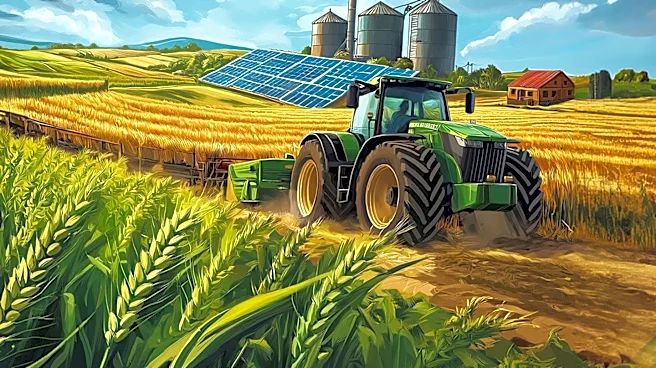
Agrivoltaics, the integration of solar energy systems with agricultural practices, is gaining traction as a sustainable solution to land use challenges. This approach allows for the simultaneous production of crops and electricity, offering a dual benefit
of food and energy generation. In Spain, agrivoltaic systems are being explored to improve agricultural output, energy efficiency, and water management, particularly in arid regions. The technology involves installing solar panels at a height that permits normal agricultural activities while providing partial shade to crops, which can enhance yields by reducing soil temperature and evaporation.
Why It's Important?
The adoption of agrivoltaics addresses the longstanding debate over land use for agriculture versus energy production. By enabling both activities to coexist, this technology maximizes land utility and provides an additional income stream for farmers, enhancing the economic viability of agricultural operations. This is particularly significant in regions facing climate challenges, such as increased heat and water scarcity. Agrivoltaics not only supports the transition to renewable energy but also contributes to food security and rural development, making it a promising strategy for sustainable growth.
What's Next?
As research and implementation of agrivoltaic systems continue, the focus will likely be on optimizing designs to suit different crops and climates. The success of pilot projects in Spain could serve as a model for other countries with similar environmental conditions. Policymakers and industry stakeholders may need to collaborate to establish guidelines and incentives that promote the adoption of agrivoltaics, ensuring that agricultural productivity is maintained while expanding renewable energy capacity.