


What's Happening?
Oxfam is a global organization dedicated to combating inequality to eradicate poverty and injustice worldwide. Oxfam GB, a key member of an international confederation comprising 21 organizations, collaborates with partners and local communities across
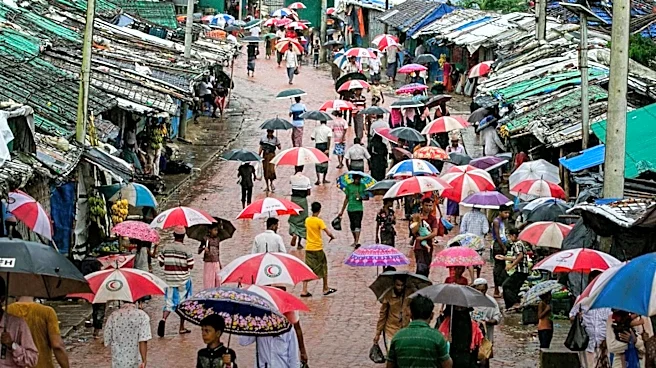
more than 90 countries. Their work spans humanitarian aid, development initiatives, and campaigning efforts. The organization's core mission is to tackle the systemic inequality that perpetuates poverty and to dismantle imbalanced power structures. Oxfam engages in diverse projects, including those focused on agriculture, peace-building, and livelihood support. They provide critical assistance during crises and advocate for economic justice. Recent discussions within the organization highlight concerns about extreme wealth concentration, the impact of big-tech billionaires on critical minerals in the Global South, and the need for a raised minimum wage to support workers and strengthen economies. Oxfam also actively addresses humanitarian crises, such as the situation in the West Bank and Gaza, offering support and advocating for affected populations.
Why It's Important?
Oxfam's work is crucial for addressing global disparities that have significant implications for U.S. foreign policy, economic stability, and humanitarian efforts. By fighting inequality and poverty, Oxfam contributes to more stable and just societies, which can reduce the drivers of migration, conflict, and extremism that often require U.S. intervention. Their advocacy for economic justice, such as raising the minimum wage, aligns with broader discussions in the U.S. about income inequality and its impact on domestic economic health. The organization's focus on dismantling unequal power structures and addressing extreme wealth concentration resonates with ongoing debates about corporate responsibility and fair economic practices, which can influence U.S. regulatory frameworks and international trade policies. Furthermore, Oxfam's humanitarian responses to crises in regions like the West Bank and Gaza are vital for providing aid and stability, often complementing or informing U.S. diplomatic and aid initiatives in these complex areas. Their efforts to promote sustainable development and peace-building also contribute to long-term global stability, indirectly benefiting U.S. interests by fostering environments less prone to conflict and economic disruption.
What's Next?
Oxfam will continue its efforts to influence policy and provide direct aid in various regions. The organization is actively campaigning for policy changes, such as the introduction of a Net Wealth Tax, particularly in contexts like Ireland, to address growing inequality. This push for wealth taxation could inspire similar discussions and movements in other developed nations, including the U.S., as governments seek ways to fund social programs and reduce economic disparities. Oxfam will also persist in its humanitarian and development projects, adapting to ongoing crises and long-term challenges. This includes continued support for communities affected by conflict and natural disasters, as well as initiatives to build resilience and promote sustainable livelihoods. The organization's advocacy will likely focus on holding governments and corporations accountable for their roles in perpetuating inequality and ensuring that commitments to poverty reduction are met with urgent implementation and adequate resources. Oxfam's ongoing monitoring of issues like the impact of big-tech on critical minerals will also shape future campaigns aimed at ethical resource extraction and corporate accountability.
Beyond the Headlines
Beyond the immediate humanitarian and policy implications, Oxfam's work highlights deeper ethical and systemic issues related to global capitalism and governance. The organization's emphasis on dismantling unequal power structures challenges the fundamental assumptions of current economic models that often concentrate wealth and power in the hands of a few. This raises questions about the moral obligations of wealthy nations and individuals, including those in the U.S., to address global poverty and inequality. The focus on issues like the exploitation of critical minerals in the Global South by big-tech companies underscores the complex interplay between technological advancement, corporate ethics, and human rights, prompting a re-evaluation of supply chains and corporate social responsibility. Furthermore, Oxfam's advocacy for a living wage and fair taxation reflects a broader societal shift towards demanding more equitable distribution of resources and opportunities, potentially leading to long-term changes in labor laws, tax policies, and international aid frameworks. These efforts contribute to a global dialogue about what constitutes a just and sustainable economic system for all.