



What's Happening?
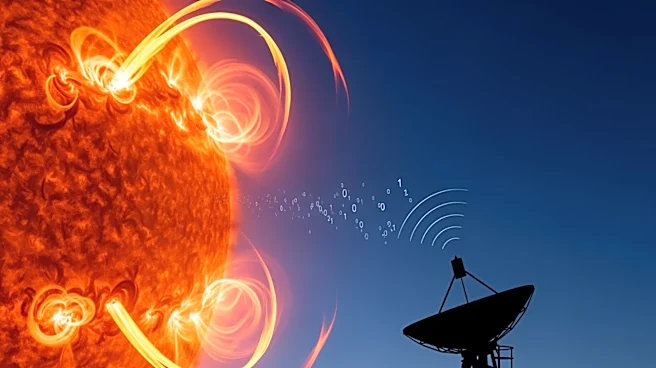
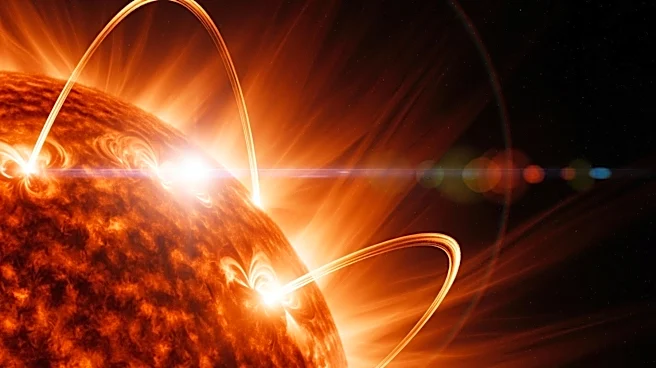
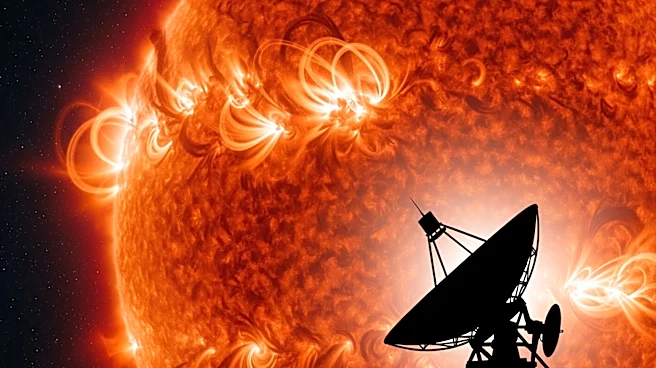
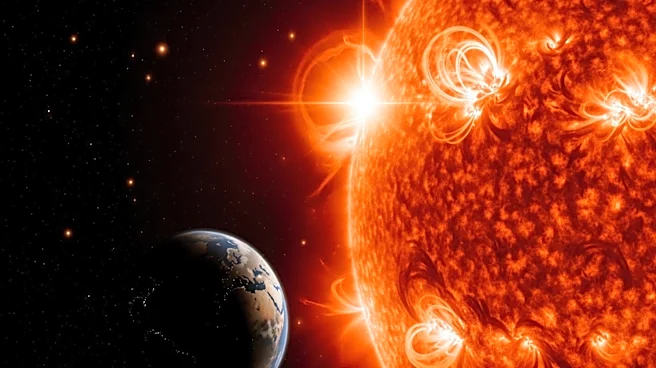
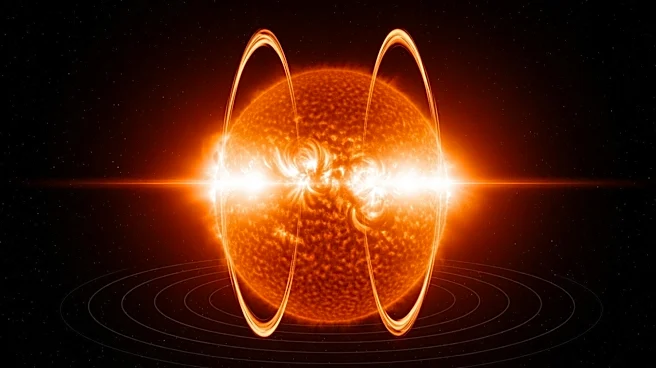
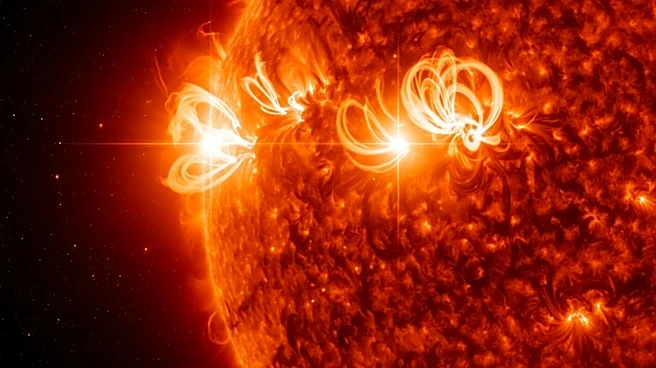
NASA has reported two intense solar flares occurring within seven hours, causing radio blackouts across parts of Earth. These solar flares, classified as X-class, are the most powerful type and have the potential to disrupt radio communications, electric
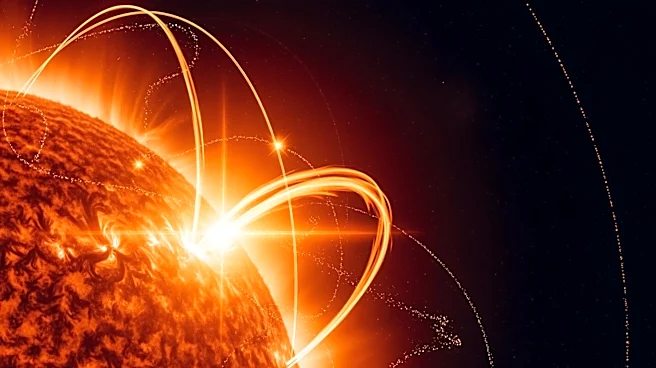
power grids, and navigation signals. The flares were accompanied by coronal mass ejections (CMEs), which are large explosions of plasma and magnetic fields from the sun. Although the CMEs are unlikely to head directly toward Earth due to the sunspot's position, forecasters are monitoring their paths for potential geomagnetic storm conditions. The April flares are noted as the strongest in 78 days, following a series of powerful flares in February.
Why It's Important?
The occurrence of solar flares and their potential impact on Earth is significant for several reasons. These flares can disrupt critical communication systems, affecting industries reliant on radio signals, such as aviation and maritime operations. Additionally, they pose risks to spacecraft and astronauts due to increased radiation exposure. The potential for geomagnetic storms could lead to vivid aurora displays but also threaten power grids and satellite operations. Understanding and predicting solar activity is crucial for mitigating these risks and ensuring the stability of technological infrastructure.
What's Next?
Forecasters will continue to observe and predict the paths of the coronal mass ejections to assess the likelihood of geomagnetic storm conditions. If a glancing blow occurs, it could trigger aurora displays and impact power grids. Stakeholders in industries reliant on radio communications and satellite operations will need to prepare for potential disruptions. NASA and other space agencies will likely increase monitoring efforts to provide timely warnings and minimize the impact on technological systems.