







What's Happening?
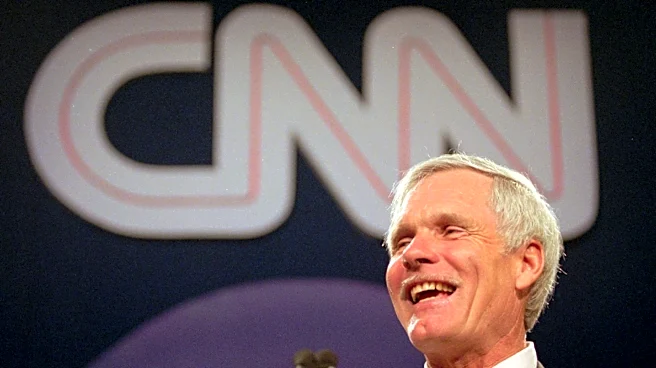
Ted Turner, the media mogul known for founding CNN, has passed away at the age of 87. Turner was a pioneering figure in philanthropy, having donated an estimated $1.3 billion over his lifetime. His most notable contribution was a $1 billion pledge to
the United Nations in 1997, which was one of the largest charitable commitments at the time. This donation helped establish the United Nations Foundation and set a precedent for large-scale giving by billionaires. Turner was also instrumental in founding the Nuclear Threat Initiative and supported numerous environmental and conservation efforts through the Turner Foundation and other initiatives.
Why It's Important?
Turner's philanthropic efforts have had a lasting impact on global giving, encouraging other wealthy individuals to make significant contributions to various causes. His approach to philanthropy, which included setting up foundations and initiatives focused on global issues like nuclear threat reduction and environmental conservation, has influenced the way modern philanthropy is conducted. Turner's legacy highlights the potential for individual wealth to drive significant social and environmental change, setting a benchmark for future generations of philanthropists. His contributions have not only provided financial support but have also raised awareness and built constituencies for important global issues.
What's Next?
As Turner's legacy continues, the future of his philanthropic initiatives will likely involve his children and grandchildren, who have been active in his various foundations. The Turner Foundation and other related entities may see increased involvement from the next generation, focusing on conservation, climate, and ocean health. The broader impact of Turner's philanthropy will depend on how these initiatives adapt to current global challenges and continue to influence the philanthropic landscape. The continuation of Turner's vision will be crucial in addressing ongoing and emerging global issues.