








What's Happening?
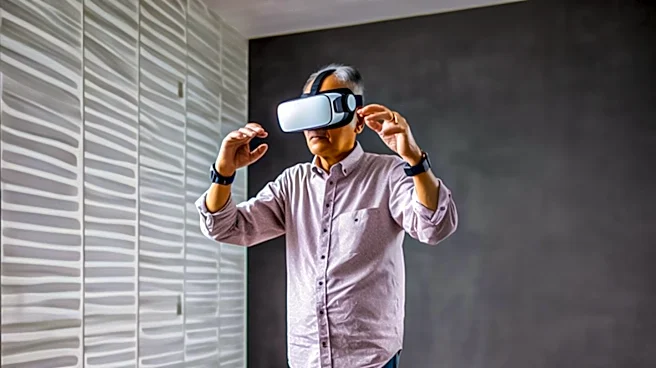
A small clinical trial has revealed that virtual reality (VR) training, specifically using the Computer Assisted Rehabilitation Environment (CAREN) system, significantly improves walking, balance, mobility, and gait symmetry in individuals with Parkinson's
disease. The study compared a 12-week VR training program with aquatic Tai Chi. While both interventions showed improvements, the VR training group experienced greater enhancements in motor symptoms, balance, walking speed, and gait symmetry. Notably, some of these benefits persisted for an additional three months after the training concluded. The CAREN system integrates a treadmill and motion platform with visual feedback, allowing patients to practice walking in simulated environments and adjust their gait in response to visual cues and environmental changes. This approach helps compensate for difficulties in the automatic control and adaptation of walking often experienced by Parkinson's patients.
Why It's Important?
This development is significant for the U.S. healthcare landscape, particularly for the growing population affected by Parkinson's disease. With gait difficulties being a major contributor to disability, falls, and reduced quality of life, effective rehabilitation methods are crucial. The sustained benefits observed with VR training suggest a potential for long-term improvement in motor function, which could reduce the burden on caregivers and healthcare systems. By enhancing balance and mobility, VR training can decrease the risk of falls, a leading cause of injury in older adults, thereby lowering emergency room visits and associated medical costs. Furthermore, improved mobility can lead to greater independence and a better quality of life for patients, potentially delaying the need for more intensive care and support services. This could also spur innovation in medical technology and rehabilitation services, creating new opportunities for businesses in the health tech sector.
What's Next?
The promising results of this clinical trial are likely to encourage further research into the efficacy and broader application of VR-based rehabilitation for Parkinson's disease. Future steps may include larger-scale clinical trials to validate these findings across diverse patient populations and to explore optimal training protocols. There could also be a push for the integration of such advanced VR systems into more rehabilitation centers and clinics across the U.S., potentially leading to increased accessibility for patients. Additionally, the development of more affordable and user-friendly VR rehabilitation tools for home use might be explored, empowering patients to continue their therapy outside of clinical settings. Healthcare providers and policymakers may consider incorporating VR training into standard care guidelines for Parkinson's, potentially influencing insurance coverage and reimbursement policies for these innovative therapies.
Beyond the Headlines
The success of VR training in Parkinson's rehabilitation highlights a broader shift towards technology-driven solutions in healthcare. This approach moves beyond traditional physical therapy by leveraging immersive environments and real-time feedback, which can be particularly effective for neurological conditions where motor control and adaptation are compromised. The ability of VR to provide consistent, measurable, and engaging therapy could set a new standard for rehabilitation, not just for Parkinson's but for other conditions affecting mobility and balance. This also raises ethical considerations regarding equitable access to such advanced technologies, as well as the need for proper training and oversight for healthcare professionals utilizing these systems. The long-term implications could include a redefinition of rehabilitation practices, with a greater emphasis on personalized, data-driven, and technologically augmented interventions, potentially leading to more proactive and preventative care models.