
What's Happening?
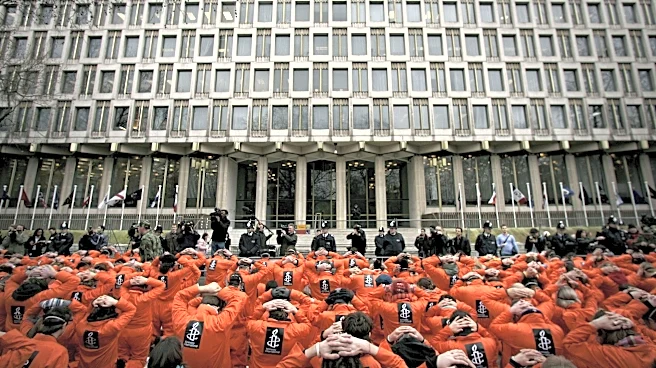
South Korea's foreign ministry is pursuing a project to reconstruct its aging embassy building in Washington D.C., estimated to cost 264.6 billion won (US$198 million). The current embassy, built in 1954,
faces safety concerns, limitations on diplomatic activities, and potential negative impacts on South Korea's national image. Despite repeated requests for funding since 2023, the project's budget proposal has not yet been included in next year's government budget. The budget subcommittee of the National Assembly's finance, economy, planning, and budget committee did not discuss the issue during a recent deliberation, indicating potential delays. Major reconstruction projects for overseas diplomatic missions are typically funded through the finance ministry's state property management fund, not the foreign ministry's general account budget, placing the issue under the finance committee's jurisdiction. Lawmakers from both ruling and opposition parties reportedly agree on the necessity of the reconstruction, recognizing the embassy's symbolic importance for South Korean diplomacy in the U.S. capital. South Korea has previously rebuilt or constructed new major diplomatic missions in other countries, such as China and Japan, to align with its national standing.
Why It's Important?
The delay in funding for the South Korean embassy reconstruction in Washington D.C. carries significant implications for U.S.-South Korean diplomatic relations and South Korea's international standing. An aging and potentially unsafe embassy building could hinder the effectiveness of South Korean diplomatic operations in the U.S., a critical ally. The physical state of an embassy often reflects a nation's image and commitment to its diplomatic presence. A dilapidated embassy could inadvertently project an image of neglect or instability, potentially affecting perceptions among U.S. officials and the public. Furthermore, the lack of timely funding, despite bipartisan agreement on the project's necessity within South Korea, highlights potential bureaucratic hurdles or competing budgetary priorities that could impact other aspects of South Korea's foreign policy infrastructure. For the U.S., a well-maintained and functional South Korean embassy facilitates smoother diplomatic exchanges and cooperation on various bilateral and regional issues, including economic partnerships and security alliances. The reconstruction is not merely a structural upgrade but a reinforcement of the enduring diplomatic ties between the two nations.
What's Next?
The immediate next step for the South Korean foreign ministry will likely involve continued efforts to secure the necessary funding for the embassy reconstruction. This will entail further engagement with the National Assembly's finance committee and the finance ministry to ensure the project's inclusion in future budget proposals. Given the reported bipartisan consensus on the need for reconstruction, political pressure may mount to prioritize this project. The ministry will need to address any concerns or questions raised by the budget committees to overcome the current funding impasse. Should the delays persist, South Korea may face increasing challenges in maintaining its diplomatic presence in Washington D.C., potentially impacting the efficiency and scope of its operations. The situation could also prompt a re-evaluation of funding mechanisms for overseas diplomatic missions to prevent similar delays in the future. The outcome of these efforts will determine the timeline for the embassy's much-needed renovation and its continued role as a symbol of South Korean diplomacy in the U.S.
Beyond the Headlines
The situation surrounding the South Korean embassy reconstruction in Washington D.C. extends beyond mere infrastructure and touches upon the broader dynamics of diplomatic representation and national image. In an era where soft power and international perception are increasingly vital, the physical state of an embassy serves as a tangible representation of a nation's strength, stability, and commitment to its foreign relations. The challenges in securing funding, despite the acknowledged importance of the project, could reflect deeper systemic issues within South Korea's budgetary processes for foreign affairs. This scenario also subtly underscores the evolving nature of diplomatic infrastructure, where modern facilities are not just about aesthetics but about providing secure, efficient, and technologically advanced environments for diplomatic work. The long-term implications could include a re-evaluation of how South Korea prioritizes and funds its global diplomatic footprint, ensuring that its physical presence abroad accurately reflects its status as a significant international actor. The incident also highlights the continuous need for nations to invest in their diplomatic assets to effectively navigate complex international relations and project a strong national identity.