







What's Happening?
Lorik Cana, the former captain of the Albanian national football team, has publicly expressed his sorrow and condemnation regarding a photograph circulating on social media. The image depicts a young girl touching a mural of Ratko Mladić, who has been
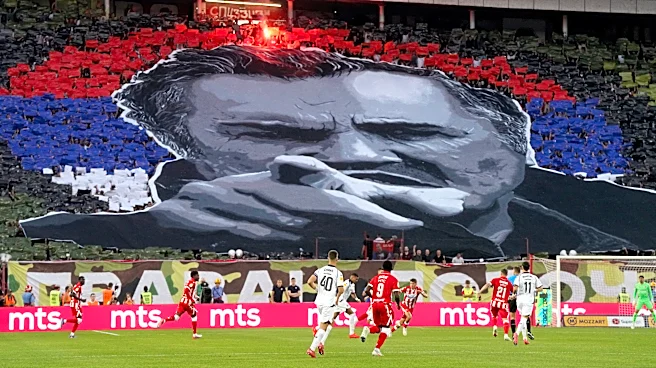
convicted of genocide and war crimes. Cana stated that the photograph deeply saddens him, particularly because it involves a generation that did not experience the war but is being exposed to the glorification of an individual responsible for severe atrocities committed in Europe after World War II. His statement emphasizes the pain of seeing such figures celebrated, especially by younger generations. This comes amidst a trend of Mladić's glorification following his death and burial in Belgrade, with his image and messages appearing in football stadiums in Serbia and Republika Srpska.
Why It's Important?
This event highlights the ongoing challenges in the Balkans regarding historical revisionism and the glorification of war criminals, which can impede reconciliation and stability in the region. The public condemnation by a prominent figure like Lorik Cana underscores the deep emotional and societal impact of such displays. For the U.S., which has historically played a role in promoting peace and stability in the Balkans, these developments are significant. The glorification of convicted war criminals can undermine efforts to foster democratic values, human rights, and regional cooperation. It can also fuel ethnic tensions and hinder the progress of countries in the region towards Euro-Atlantic integration, which is a key U.S. foreign policy objective. The incident reflects a broader struggle against narratives that deny or minimize war crimes, posing a threat to international justice and the rule of law.
What's Next?
The public outcry from figures like Lorik Cana may prompt further discussions and actions from international bodies and human rights organizations regarding the glorification of war criminals in the Balkans. There could be increased pressure on governments in the region to address these issues more effectively, potentially leading to stricter enforcement of laws against hate speech and the promotion of individuals convicted of genocide. Civil society groups and educational institutions might intensify their efforts to educate younger generations about the true history of the conflicts and the importance of reconciliation. However, resistance from nationalist elements could also escalate, leading to further polarization. The international community, including the U.S., will likely continue to monitor the situation and may consider diplomatic or other measures to encourage adherence to international norms and justice.
Beyond the Headlines
The incident transcends a simple news report, touching upon profound ethical and cultural dimensions. The glorification of war criminals, particularly through public displays and the involvement of children, raises serious questions about collective memory, historical accountability, and the moral education of future generations. It reflects a societal struggle to confront a painful past and move towards a more peaceful and just future. The normalization of such figures can perpetuate cycles of hatred and division, making genuine reconciliation difficult. This phenomenon also highlights the power of symbols and narratives in shaping public opinion and identity, especially in post-conflict societies. The challenge lies in fostering an environment where historical truths are acknowledged, victims are honored, and those responsible for atrocities are unequivocally condemned, rather than celebrated.