



What's Happening?
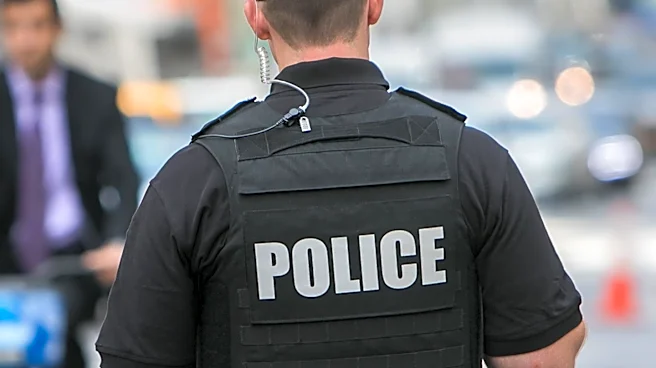
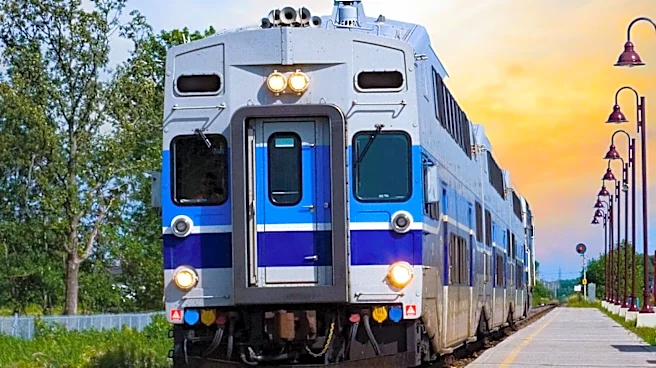
In Thornton, Colorado, an RTD N Line train struck an unoccupied Thornton police truck at the 100th Avenue Crossing around 6:40 a.m. The incident occurred while the police truck was securing a perimeter at the scene of a deadly shooting. Earlier, two individuals
were found shot inside a vehicle that had crashed into a pole; one person died at the scene, and another was transported to a hospital with life-threatening injuries. The Thornton police truck had its lights activated at the time of the collision. There were 70 customers on board the RTD train, but no injuries were reported among them. The train sustained minor damage, and video footage showed damage to the white patrol vehicle. The incident led to the closure of a portion of Colorado Boulevard from East 100th Avenue to Thornton Parkway for an extended period, and RTD N Line service was temporarily disrupted, with shuttle buses deployed for passengers.
Why It's Important?
This event highlights critical issues concerning public safety, emergency response coordination, and transportation infrastructure in urban areas. The collision between a train and a police vehicle, even if unoccupied, underscores the inherent risks faced by first responders and the complexities of managing multiple emergencies simultaneously. The disruption to RTD N Line service impacts daily commuters, emphasizing the reliance on public transportation and the cascading effects of unforeseen incidents on urban mobility. Furthermore, the initial deadly shooting incident points to ongoing challenges with violent crime, requiring significant police resources and leading to broader community concerns. The need for clear protocols and communication between different agencies, such as law enforcement and public transit, becomes paramount to prevent secondary incidents and ensure the safety of both emergency personnel and the public.
What's Next?
Thornton police will continue their investigation into the deadly shooting, which remains the primary incident. Concurrently, authorities will likely investigate the circumstances surrounding the RTD N Line train striking the unoccupied police truck to determine the exact cause and assess any procedural lapses. This investigation may involve reviewing safety protocols for securing crime scenes near active transportation lines and evaluating communication between law enforcement and RTD. RTD has resumed N Line service, but bus service will remain in place to supplement trains, indicating potential ongoing delays or adjustments. For drivers, alternative routes such as Riverdale Road or Steele Street will continue to be recommended to avoid the closed section of Colorado Boulevard. The outcomes of these investigations could lead to revised safety guidelines and operational procedures for both police and public transit agencies.
Beyond the Headlines
The incident in Thornton reveals deeper implications regarding the intersection of urban development, public safety, and infrastructure management. The proximity of a major transportation line to a crime scene requiring extensive police presence illustrates the challenges of maintaining public order and safety in densely populated areas. It also raises questions about the adequacy of current safety measures and training for emergency personnel operating near active rail lines. The event could prompt a re-evaluation of how different municipal departments coordinate during critical incidents, potentially leading to integrated command structures or enhanced technological solutions for real-time communication and hazard mitigation. Ultimately, this incident serves as a stark reminder of the unpredictable nature of urban emergencies and the continuous need for robust, adaptable, and collaborative public safety frameworks to protect both citizens and first responders.