





What's Happening?
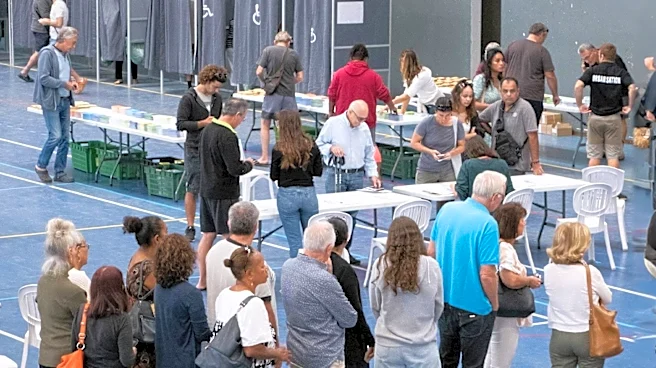
Canyon County voters have rejected a proposed $20 annual vehicle registration fee, which would have contributed to local road projects. The fee was intended to help address a significant road funding gap, including deferred maintenance in Nampa. Nampa Transportation
Director Crystal Craig stated that the city had planned to use its share of the funds for deferred maintenance, which would have resulted in new pavement. The proposed fee was estimated to generate $4.4 million annually across the county, covering approximately 9% of the estimated $49 million annual gap in local road funding. In contrast, neighboring Ada County voters chose to maintain an existing registration fee that generates about $14 million annually.
Why It's Important?
The rejection of the vehicle registration fee in Canyon County has significant implications for local infrastructure and public services. With a remaining $49 million road funding gap, the county and its cities, including Nampa, will continue to face challenges in maintaining and improving their road networks. This decision means that deferred maintenance, such as repaving, will likely persist, potentially leading to deteriorating road conditions, increased vehicle wear and tear, and safety concerns for residents. The lack of dedicated funding also limits the ability of local governments to keep pace with growth and address critical infrastructure needs, impacting daily commutes and the overall quality of life for Canyon County residents. The outcome highlights the ongoing struggle for local governments to secure adequate funding for essential services.
What's Next?
With the rejection of the vehicle registration fee, Canyon County and Nampa face the challenge of finding alternative funding sources for road maintenance. Nampa Transportation Director Crystal Craig indicated that the registration fee could potentially return to the ballot in 2028 at the earliest. Another option considered by the city is raising property taxes, though Craig stated this is viewed as a last resort. Nampa currently collects impact fees from new developments, which can fund improvements like adding lanes or widening intersections, but state law restricts their use for routine repaving. The city also receives about $5 million annually in property tax revenue for transportation, which offers more flexibility but is insufficient to cover the extensive needs, with repaving a single mile of a two-lane road costing $4 million to $5 million. Federal grants have assisted with safety and expansion projects, but often cannot be used for the deferred paving work.
Beyond the Headlines
The decision by Canyon County voters to reject the vehicle registration fee reflects a broader tension between public demand for improved infrastructure and resistance to new taxes or fees. This dynamic is common across many U.S. localities, where citizens desire better services but are often hesitant to bear the direct financial burden. The outcome also underscores the complexities of local government finance, where specific revenue streams are often legally restricted in their use, limiting flexibility for critical needs like road maintenance. The disparity between Canyon County's decision and Ada County's choice to retain a similar fee highlights differing community priorities or economic conditions, and it may lead to noticeable differences in infrastructure quality between the two neighboring areas over time. This situation could also prompt local officials to explore more innovative or politically palatable funding mechanisms in the future.