




What's Happening?
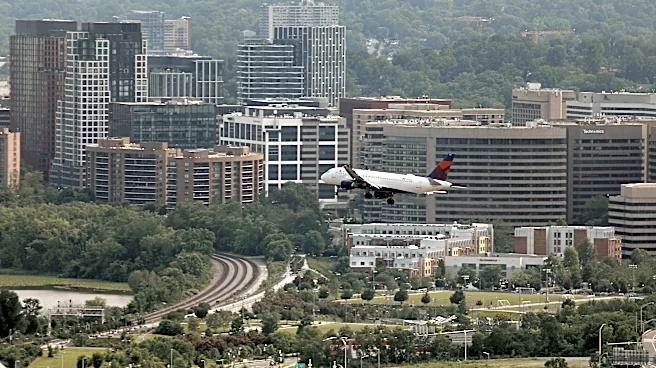
The Metropolitan Washington Airports Authority (MWAA) has granted program management contracts to Jacobs and TYLin. These contracts are aimed at supporting significant infrastructure improvements at Washington Dulles International Airport and Ronald Reagan
Washington National Airport. The agreements are set for five years with a combined spending limit of $150 million, with potential extensions that could increase the total to $300 million over 10 years. The firms will provide services such as planning, engineering oversight, environmental support, construction management, and contract administration. At Dulles, plans include new domestic and international concourses, expanded passenger processing facilities, upgraded baggage handling systems, and additional retail and dining spaces. The improvements are expected to eliminate the need for mobile lounges and plane mates. Reagan National will see the replacement of Terminal 1 and redevelopment of its South Area. A major part of the over $20 billion redevelopment at Dulles involves expanding its underground transportation network, known as Package T, which includes extensions of the AeroTrain automated people mover, pedestrian tunnels, and underground baggage transportation.
Why It's Important?
This extensive modernization project is crucial for enhancing the operational efficiency and passenger experience at two of the nation's busiest airports. The elimination of mobile lounges and plane mates at Dulles, for instance, signifies a move towards more streamlined and modern passenger transit within the airport, potentially reducing travel times and improving convenience. The significant investment in new concourses, processing facilities, and retail spaces will not only accommodate growing passenger volumes but also boost economic activity through increased commerce and job creation in the Washington D.C. metropolitan area. For the U.S. aviation industry, these upgrades set a precedent for future airport developments, emphasizing advanced infrastructure and passenger-centric design. The involvement of major engineering firms like Jacobs and TYLin underscores the complexity and scale of these projects, highlighting the demand for specialized expertise in large-scale public infrastructure development. The phased construction approach will require careful coordination to minimize disruption, showcasing best practices in managing large-scale public works while maintaining essential services.
What's Next?
The five-year agreements with Jacobs and TYLin are now in effect, with the firms beginning to supplement MWAA's internal resources for the concurrent capital improvement projects. The modernization programs will necessitate continuous coordination among airport management, airlines, engineering firms, and construction contractors to ensure airport operations are maintained throughout the phased construction. Future steps will involve the detailed planning and execution of the various components, including the expansion of Dulles's underground transportation network (Package T) and the replacement of Terminal 1 at Reagan National. The exploration of high-speed moving walkways and autonomous passenger shuttles at Dulles indicates a forward-looking approach to integrating advanced technology into airport infrastructure. The potential for contract extensions beyond the initial five years suggests a long-term commitment to these modernization efforts, with ongoing oversight and adjustments expected as the projects progress.
Beyond the Headlines
The modernization of Washington Dulles International Airport and Ronald Reagan Washington National Airport reflects a broader national trend towards upgrading critical infrastructure to meet increasing demands and technological advancements. This initiative goes beyond mere capacity expansion; it aims to redefine the passenger experience, integrating cutting-edge solutions like autonomous shuttles and expanded automated people movers. The substantial investment, potentially reaching $300 million over ten years for program management alone, highlights the immense financial and logistical commitment required for such large-scale public works. This project could serve as a blueprint for other major U.S. airports facing similar challenges of aging infrastructure and growing passenger traffic. Furthermore, the emphasis on environmental support within the contracts suggests a growing awareness of sustainability in large construction projects, potentially influencing future infrastructure development policies. The successful execution of these projects could significantly enhance the global competitiveness of U.S. air travel hubs.