



What's Happening?
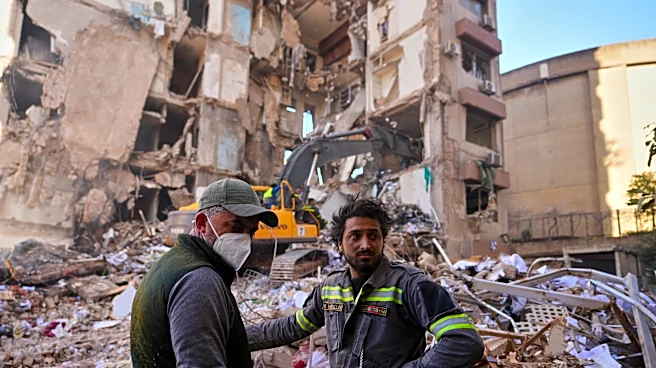
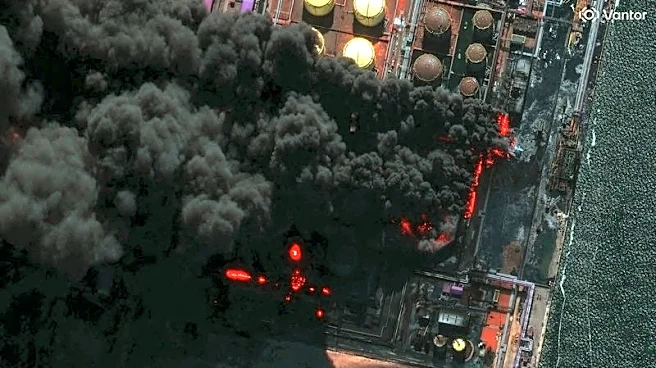
Russia's involvement in the Iran conflict has revealed significant strategic weaknesses, despite its efforts to support Iran. The Kremlin's media apparatus has been actively promoting the cessation of the war, indicating a failure to achieve operational
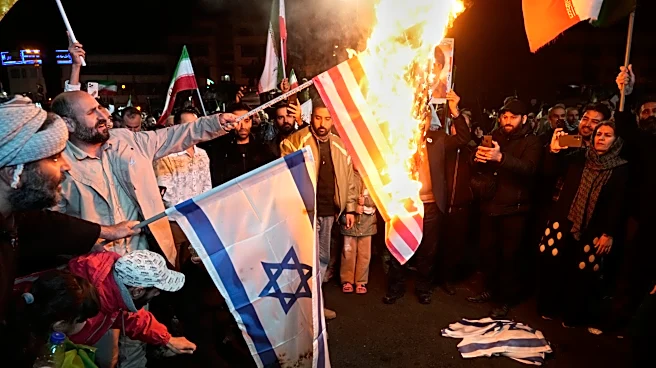
objectives on the ground. Russian rhetoric suggests that the degradation of Iran's military capabilities is detrimental to the Russia-China-Iran axis, which relies on Iran for strategic influence in regions like the Caucasus and Central Asia. The conflict has also impacted Russia's ability to maintain its influence over Armenia and Azerbaijan, as well as its strategic foothold in Syria. Russian officials, including Alexander Dugin, have framed the conflict as a contest for global hegemony, with the U.S. and Israel's actions against Iran perceived as indirect attacks on Russia.
Why It's Important?
The weakening of Iran poses a significant challenge to Russia's strategic interests, particularly in maintaining influence in the Caucasus and Central Asia. The conflict has disrupted Russia's ability to leverage Iran's military capabilities and financial networks, which have been crucial for circumventing U.S. sanctions. Additionally, the degradation of Iran's military capacity affects Russia's drone warfare capabilities in Ukraine, as Iran has been a key supplier of drones to Russia. The situation highlights the vulnerability of Russia's strategic alliances and its reliance on Iran for regional influence. The conflict also underscores the effectiveness of U.S. strategies in limiting Russia's options and exerting pressure on its geopolitical interests.
What's Next?
The ongoing conflict may lead to further shifts in regional alliances, with countries in the Caucasus and Central Asia potentially moving away from Russian influence. The U.S. and its allies may continue to exploit Russia's vulnerabilities by targeting its strategic partnerships and financial networks. Russia may attempt to strengthen its alliances with other countries, such as Venezuela and Cuba, to counterbalance U.S. influence. The Kremlin's media strategy may continue to focus on portraying the conflict as a threat to Russian interests, while seeking to draw a wedge between Western allies.
Beyond the Headlines
The conflict in Iran has broader implications for global power dynamics, as it challenges the Russia-China-Iran axis and highlights the strategic importance of the region. The situation may lead to increased competition for influence in the Middle East and Central Asia, with the U.S. and its allies seeking to capitalize on Russia's weakened position. The conflict also raises questions about the effectiveness of Russian propaganda and its ability to shape perceptions in the West. The degradation of Iran's military capabilities may have long-term consequences for regional stability and the balance of power.