





What's Happening?
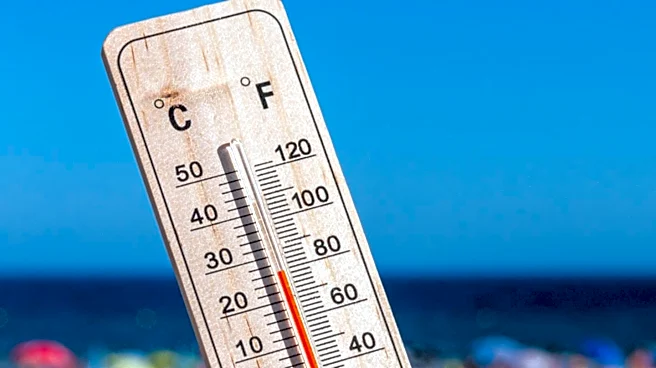
A severe heatwave across the eastern two-thirds of the United States has been linked to at least 22 deaths, according to authorities. The National Weather Service issued heat alerts affecting nearly 156 million people, with temperatures exceeding 100
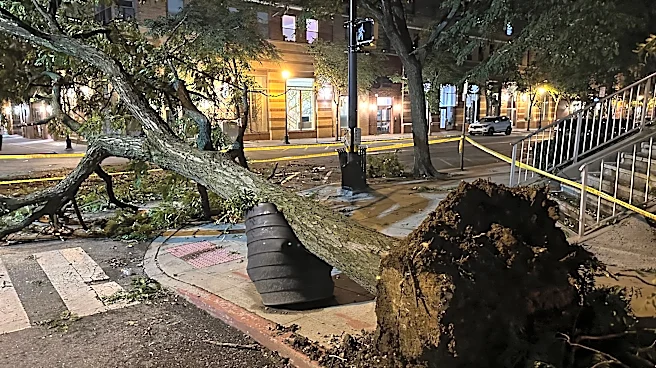
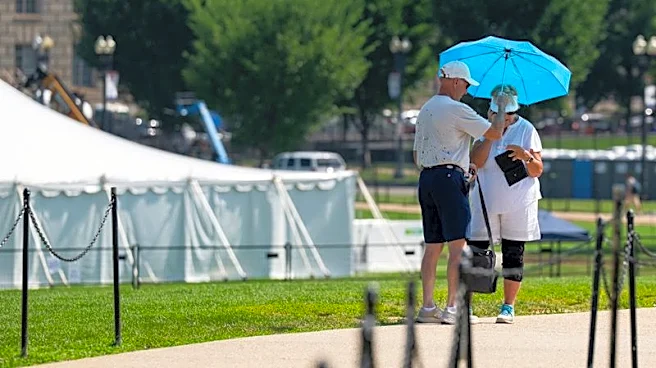
degrees Fahrenheit in areas such as Washington, D.C., Norfolk, Virginia, and Raleigh, North Carolina. The heatwave, caused by a high-pressure dome, has also disrupted Fourth of July celebrations, including the Salute to America 250 festivities in Washington, D.C., where emergency workers assisted attendees suffering from heat-related ailments. Additionally, severe thunderstorms have caused power outages for over 900,000 utility customers across states from Arkansas to New York, with Michigan experiencing the highest number of outages.
Why It's Important?
The ongoing heatwave and severe weather conditions highlight the increasing vulnerability of U.S. infrastructure and public health systems to extreme weather events. The fatalities, particularly in New Jersey, underscore the risks faced by individuals without access to air conditioning or adequate shelter. The disruption of major public events like the Fourth of July celebrations also reflects the broader societal impacts of climate change, as communities must adapt to more frequent and intense weather patterns. The power outages further complicate the situation, affecting millions and potentially exacerbating heat-related health risks.
What's Next?
The National Weather Service predicts that cooler air from the north will gradually push the heat dome south and west, potentially alleviating extreme temperatures in the Northeast. However, the agency warns that dangerous overnight warmth and high humidity will continue to pose health risks. Authorities are deploying resources such as chillers and generators to healthcare facilities in distress, and in some cases, evacuating patients. The ongoing severe weather, including thunderstorms, is expected to persist, requiring continued vigilance and preparedness from emergency services and the public.