









What's Happening?
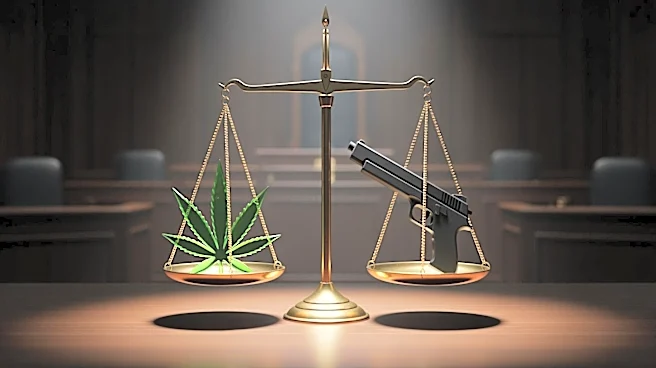
The Supreme Court has ruled in favor of Ali Danial Hemani, a Texas resident who challenged a federal law barring marijuana users from owning firearms. The unanimous decision, authored by Justice Neil Gorsuch, found that the government's prosecution of Hemani was
inconsistent with the Second Amendment. The court's ruling is narrow, focusing on the specific circumstances of Hemani's case, where he used marijuana but was not deemed a danger to others. This decision reflects the court's cautious approach to balancing gun rights with public safety concerns, particularly as marijuana use becomes more widespread and accepted across the United States.
Why It's Important?
This ruling is a pivotal moment in the ongoing debate over gun rights and drug use in the U.S. It underscores the challenges of applying federal laws in a landscape where marijuana is increasingly legalized at the state level. The decision may influence future legal interpretations and enforcement of gun laws, particularly concerning non-violent drug users. It also highlights the court's role in shaping the boundaries of the Second Amendment, potentially affecting millions of Americans who use marijuana. The ruling could lead to broader discussions about the intersection of drug policy and gun rights.
What's Next?
The Supreme Court's decision may prompt further legal challenges as courts and lawmakers grapple with the implications of this ruling. Prosecutors will need to consider the court's guidance when pursuing cases involving drug use and gun ownership. The decision may also influence legislative efforts to address the complexities of gun laws in the context of evolving drug policies. As marijuana legalization continues to expand, the ruling could serve as a benchmark for future cases involving similar issues.