







What's Happening?
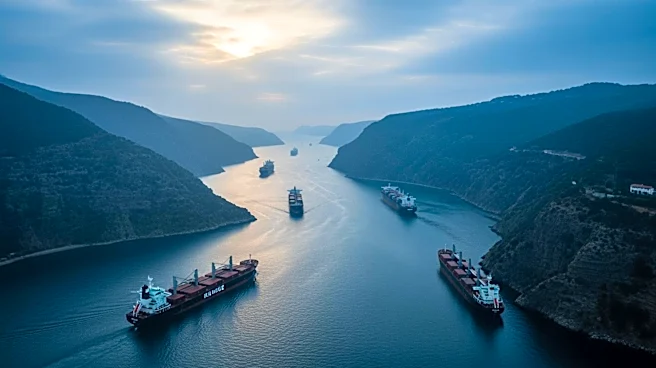
The Strait of Hormuz remains largely blocked as shipowners assess the safety of transiting the critical waterway following a fragile ceasefire between the US and Iran. Only three ships were observed leaving the region on Wednesday, with over 800 freighters
still stuck inside the gulf. Iran has stipulated that its armed forces must coordinate navigation through the strait, which is a vital channel for global oil transport. The ceasefire has been welcomed by shipowners and insurers, but they caution that more details are needed to ensure safe passage. Iran has been charging a toll for transit, and the situation remains tense with unresolved underlying tensions.
Why It's Important?
The blockage of the Strait of Hormuz, a key oil and liquefied natural gas transit route, has significant implications for global energy markets. The strait handles a fifth of the world's oil supply, and its closure has led to an unprecedented oil-supply crunch. The ongoing uncertainty affects global commodity prices and poses risks to the safety of crews on stranded ships. The situation highlights the geopolitical tensions in the region and the potential for further disruptions in global shipping and energy supply chains.
What's Next?
Shipowners, insurers, and traders are closely monitoring the situation to determine when and how normal shipping flows can resume. The International Maritime Organization is working to implement a mechanism for safe transit through the strait. The outcome of the ceasefire and the ability to ensure safe passage will dictate the future of global shipping routes and energy supply stability. The situation remains fluid, with potential for further developments depending on the actions of the US, Iran, and other regional stakeholders.