


What's Happening?
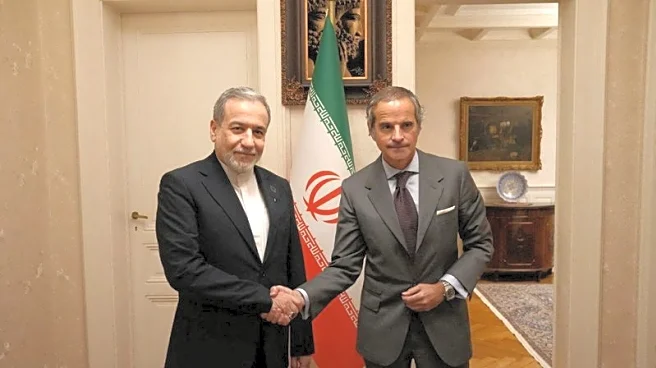
Iran's Foreign Minister Abbas Araghchi met with Rafael Grossi, the director-general of the International Atomic Energy Agency (IAEA), in Geneva. This meeting precedes a second round of negotiations with the United States regarding Iran's nuclear program.
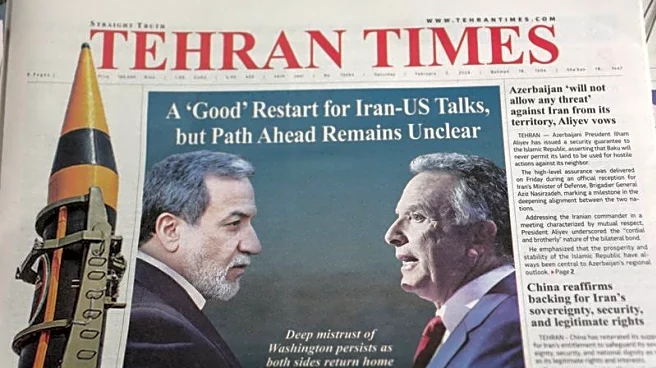
The discussions are set against a backdrop of heightened military activity, with Iran conducting naval drills in the Strait of Hormuz, a critical passage for global oil trade. The U.S. has responded by deploying additional military assets to the region, including an aircraft carrier. Iran has signaled a willingness to compromise on its nuclear activities in exchange for relief from international sanctions, a stance reiterated by Deputy Foreign Minister Majid Takht-Ravanchi. The talks are part of ongoing efforts to address tensions that have escalated following previous military confrontations and diplomatic breakdowns.
Why It's Important?
The outcome of these negotiations could significantly impact international relations and regional stability. A successful agreement might ease tensions in the Middle East, potentially stabilizing global oil markets and reducing the risk of military conflict. For the U.S., achieving a diplomatic resolution aligns with broader strategic goals of non-proliferation and regional security. Conversely, failure to reach an agreement could exacerbate tensions, leading to further military confrontations and economic disruptions. The stakes are high for both nations, with Iran seeking economic relief and the U.S. aiming to prevent nuclear proliferation.
What's Next?
The next steps involve the continuation of talks in Geneva, with Oman hosting the discussions. Both parties are under pressure to demonstrate flexibility and commitment to a peaceful resolution. The U.S. is likely to maintain its military presence in the region as a deterrent, while Iran may continue its military exercises to assert its strategic interests. The international community will be closely monitoring these developments, as any agreement could set a precedent for future diplomatic engagements in the region.