






What's Happening?
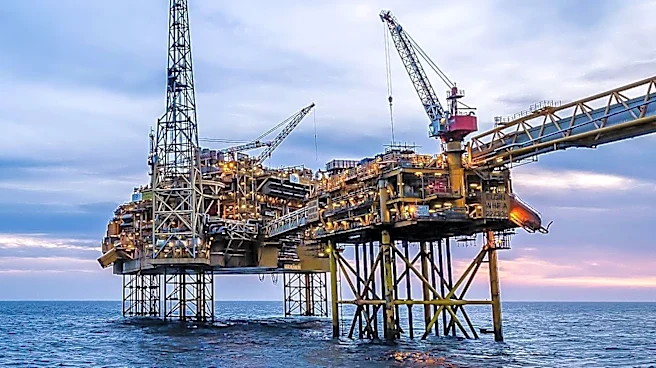
Ugandan President Yoweri Museveni officially named the country's crude oil blend 'Pearl Sweet' during a ceremony at the Kingfisher oil field near Hoima. This naming signifies a key step in Uganda's oil and gas resource development. The name 'Pearl Sweet' is a combination
of Uganda's historical nickname, 'the pearl of Africa,' and the crude's characteristic low sulfur content, which classifies it as 'sweet' crude. President Museveni emphasized the strategic importance of refining, petrochemical industries, and utilizing associated gas for electricity generation. These initiatives aim to maximize the value derived from Uganda's natural resources and reduce the nation's reliance on imported petroleum products. Commercial oil production is slated to commence by the end of 2026, with projects from CNOOC and TotalEnergies expected to contribute to a combined plateau production of approximately 230,000 barrels per day. This development positions Uganda to become a significant oil producer in East Africa.
Why It's Important?
Uganda's entry into the global oil market with its 'Pearl Sweet' crude blend holds significant implications for the East African region and the international energy landscape. Achieving the projected production target of 230,000 barrels per day would establish Uganda as the largest oil producer in East Africa, surpassing current leaders like South Sudan. This increased supply could introduce a new source of crude to the international market, potentially influencing regional energy dynamics and global oil prices. For Uganda, the development is crucial for economic growth, with the government prioritizing local content to translate oil resources into skills, businesses, infrastructure, and technology. The focus on refining and petrochemical industries also suggests a move towards greater energy independence and value addition within the country, reducing the economic burden of petroleum imports. The success of these projects could attract further foreign investment into Uganda's energy sector.
What's Next?
Commercial oil production in Uganda is scheduled to begin by the end of 2026. Following the initial flow, production is expected to gradually ramp up to reach the targeted plateau of 230,000 barrels per day. The crude from the Tilenga and Kingfisher projects will be blended and then transported through the 1,443-kilometer East African Crude Oil Pipeline (EACOP) to Tanzania’s port of Tanga for export. The Uganda National Oil Company (UNOC) CEO, Proscovia Nabbanja, highlighted that the naming ceremony marks the next phase of bringing Uganda's crude to market and establishing long-term relationships with refiners and traders. The government, through the Petroleum Authority of Uganda, will continue to prioritize local content initiatives to ensure that the oil resources contribute to broader economic development and job creation within the country.
Beyond the Headlines
The development of Uganda's oil sector, marked by the naming of 'Pearl Sweet' crude, carries deeper implications beyond immediate economic gains. The emphasis on local content and value addition through refining and petrochemical industries suggests a strategic vision to avoid the 'resource curse' often associated with oil-rich nations. By fostering domestic industries and skills, Uganda aims to create a more diversified and resilient economy rather than solely relying on crude oil exports. However, the construction and operation of the East African Crude Oil Pipeline (EACOP) have faced environmental and social concerns from various international organizations, which could continue to be a point of contention. The long-term success of Uganda's oil venture will depend not only on production targets but also on sustainable resource management, equitable distribution of benefits, and effective mitigation of environmental impacts, shaping the country's development trajectory for decades to come.