





What's Happening?
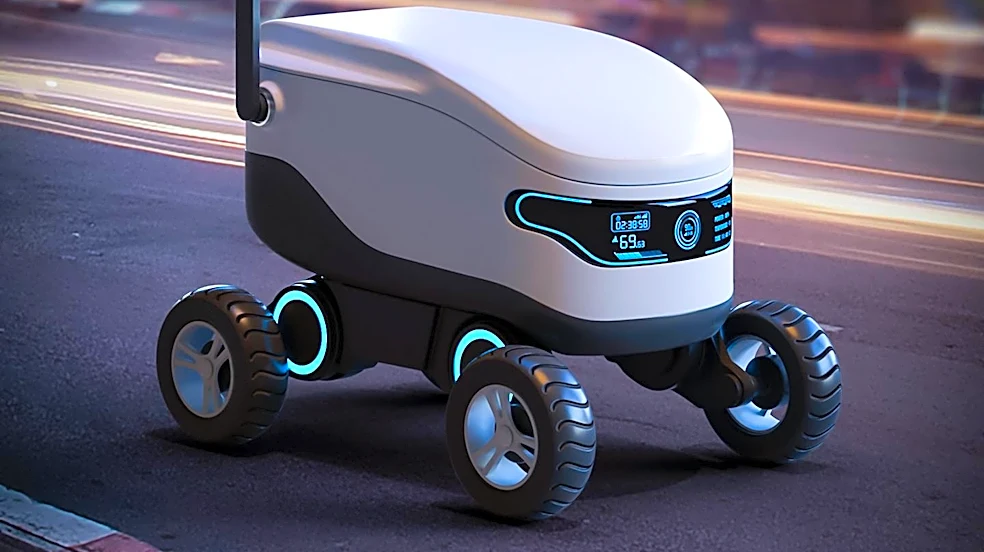
Two class-action lawsuits have been filed in Illinois against food delivery robot companies Coco and Serve, alleging violations of the Illinois Biometric Information Privacy Act (BIPA). The lawsuits claim that these robots scan the faces and hands of customers
and bystanders without consent, using the collected biometric data to train AI models and sharing it with third parties. The plaintiffs, Mitchell Breidinger (a DoorDash customer who received an order via a Coco robot) and Barry Schain (an Uber Eats customer who received an order via a Serve robot), assert that their biometric data was recorded and transmitted without their knowledge or permission. Both Coco Robotics and Serve Robotics deny the allegations, stating they comply with Illinois law and do not use data to identify individuals or create biometric profiles. The lawsuits seek damages of $5,000 for each intentional or reckless violation, or $1,000 for each negligent violation, for all affected customers in Illinois.
Why It's Important?
These lawsuits are significant as they challenge the rapidly expanding use of autonomous delivery technology and its intersection with personal privacy rights, particularly under the stringent Illinois Biometric Information Privacy Act. BIPA is one of the strongest biometric privacy laws in the U.S., requiring explicit consent before collecting, storing, or sharing biometric data. The outcome of these cases could set a precedent for how technology companies deploy AI-powered devices that interact with the public, potentially influencing regulations nationwide. For consumers, it highlights the growing concern over data privacy in an increasingly automated world, especially when personal biometric information is involved. For the food delivery and robotics industries, a ruling against Coco and Serve could necessitate significant changes in their operational practices, data handling policies, and transparency with users, potentially increasing compliance costs and slowing technological adoption if not addressed proactively.
What's Next?
Both Coco Robotics and Serve Robotics have stated their intention to defend against the lawsuits, asserting that their technologies comply with privacy laws and do not collect biometric data in violation of BIPA. The legal proceedings will likely involve detailed examinations of the robots' sensor technologies, data collection methods, and data sharing agreements. The plaintiffs' legal counsel emphasizes the potential for misuse of sensitive biometric data by cybercriminals, underscoring the need for robust protection. If the plaintiffs prevail, the companies could face substantial financial penalties, potentially totaling millions of dollars, and be forced to alter their robot delivery operations in Illinois. This could also prompt other states to consider similar biometric privacy legislation or lead to federal discussions on regulating AI and robotics in public spaces.
Beyond the Headlines
The class-action lawsuits against Coco and Serve robots delve into the deeper ethical and societal implications of pervasive AI and autonomous technologies. The core issue extends beyond mere data collection to the fundamental right of individuals to control their personal biometric information in public and semi-public spaces. The use of LiDAR sensors to map facial and hand geometry, even if not explicitly for identification, raises questions about the potential for future re-identification and tracking as AI capabilities advance. This case could spark broader debates about the 'right to be unrecorded' in an era of ubiquitous sensing devices. It also highlights the challenge for companies to innovate with AI while respecting privacy, especially when users may not explicitly opt into or even be aware of data collection by autonomous agents. The outcome could shape public trust in autonomous technologies and influence the development of future smart city initiatives and automated services.