








What's Happening?
British International Investment (BII), the UK's development finance institution, has announced a commitment to deploy and mobilize $1.6 billion in climate finance across Southeast Asia over the next five years. This initiative will focus on economies
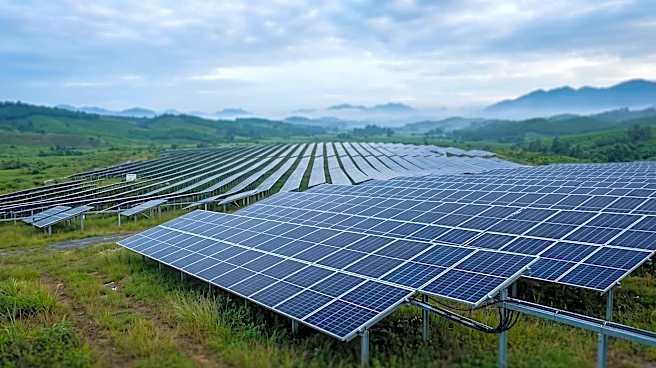
including Vietnam, Indonesia, the Philippines, Malaysia, and Thailand. Approximately half of this capital, around $800 million, is expected to come directly from BII, with a similar amount mobilized from private investors. The strategy targets key sectors such as renewable energy, power transmission, electric vehicle infrastructure, waste management, and water infrastructure. BII's objective is to support cleaner economic growth and reduce emissions in a region characterized by rapidly growing electricity markets that still heavily rely on fossil fuels. This commitment marks a significant increase from the nearly $400 million BII invested in climate finance in Southeast Asia between 2023 and 2025.
Why It's Important?
This substantial investment by BII is crucial for accelerating the green transition in Southeast Asia, a region vital for global climate efforts due to its fast-growing economies and continued dependence on high-emitting fossil fuels. By targeting critical infrastructure like renewable energy and EV networks, BII aims to foster sustainable development and reduce carbon emissions. The strategy's emphasis on mobilizing private capital alongside BII's direct investment is particularly significant, as it seeks to de-risk projects and make them more attractive to commercial partners, thereby expanding the overall pipeline of climate finance opportunities. This approach could serve as a model for other development finance institutions looking to leverage their capital to attract broader private sector engagement in emerging markets. The success of this initiative could lead to a significant reduction in regional carbon footprints and contribute to global climate goals, while also creating new economic opportunities in green industries.
What's Next?
Over the next five years, BII will focus on deploying the $1.6 billion across the identified Southeast Asian economies, with a strong emphasis on attracting matching private investment. The effectiveness of this strategy will largely depend on BII's ability to mobilize the projected $800 million from commercial investors. The British Climate Partners (BCP) initiative, launched earlier this year, is expected to be a key conduit for a significant portion of this capital, specifically targeting high-growth, carbon-intensive economies in Asia. BII anticipates that its wider climate investments will add approximately 1.8 GW of clean-energy capacity and avoid nearly 1.7 million tonnes of carbon emissions. The institution will continue to invest in a mix of projects beyond just renewable generation, including transmission, EV infrastructure, water, and waste systems, recognizing the need for a holistic approach to energy transition. Regular assessments of the progress in mobilizing private capital and achieving emission reduction targets will be critical.
Beyond the Headlines
The BII's commitment highlights a broader trend in international development finance, where institutions are increasingly acting as catalysts to unlock private capital for climate action in developing regions. This strategy acknowledges that public funds alone are insufficient to meet the vast investment needs for climate resilience and decarbonization. The focus on Southeast Asia also underscores the geopolitical and economic importance of the region in the global fight against climate change. Success here could demonstrate a viable pathway for other carbon-intensive emerging markets to transition to cleaner energy sources, potentially influencing global investment patterns and climate policy. Furthermore, by supporting infrastructure development, BII's initiative could foster long-term economic stability and create green jobs, contributing to sustainable development beyond just environmental benefits. The challenge will be to ensure that these investments genuinely lead to equitable and inclusive growth, avoiding potential pitfalls of large-scale infrastructure projects in developing nations.