






What's Happening?
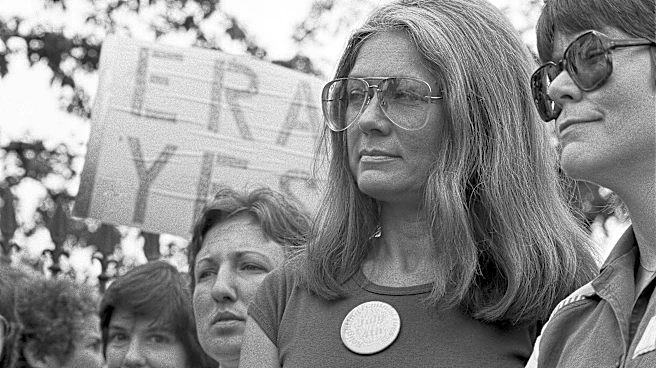
Feminist icon Gloria Steinem, who spent much of her life questioning traditional marriage, married David Bale, father of actor Christian Bale, in 2000 at the age of 66. This decision prompted questions given her long-standing public views on marriage as
a restrictive institution for women. Steinem clarified that her stance on marriage evolved because the institution itself had changed, specifically citing decades of alterations in U.S. marriage laws that granted women more rights within the marital framework. She noted that earlier in her life, marriage would have meant losing her name, legal residence, credit rating, and many civil rights, which was no longer the case by 2000. The ceremony itself reflected this modern perspective, using the term 'partners' instead of 'husband' and 'wife.' Their marriage, which lasted three years until David Bale's death in 2003, also had practical implications, as it allowed David Bale, a British businessman and environmentalist, to obtain a green card after overstaying his visa.
Why It's Important?
Steinem's marriage, despite her previous critiques, highlights the significant legal and societal shifts regarding women's rights within marriage in the United States. Her explanation that 'marriage changed' underscores the impact of feminist movements and legislative reforms that empowered women to retain their independence and legal identity post-marriage. This evolution is crucial for understanding the progress of gender equality, demonstrating how legal frameworks can adapt to societal demands for fairness. The story also illustrates the personal dimension of these broader changes, showing how even a prominent critic of traditional institutions can embrace a reformed version when it aligns with principles of equality. The ability for women to maintain their legal and financial autonomy within marriage is a cornerstone of modern gender equality, influencing everything from property rights to professional careers and personal freedom.
What's Next?
The legacy of Gloria Steinem's views and actions continues to influence discussions around gender roles, legal rights, and personal autonomy in the U.S. While the immediate event of her marriage is historical, its interpretation provides ongoing context for contemporary debates on marriage, partnership, and women's societal roles. Future discussions may continue to examine how legal and social institutions adapt to evolving understandings of equality and individual rights. The narrative serves as a reminder that societal progress is often a continuous process, with past reforms laying the groundwork for future advancements and challenges. The ongoing re-evaluation of traditional structures in light of modern values will likely remain a pertinent theme in social and legal discourse.
Beyond the Headlines
Steinem's marriage to David Bale, and her subsequent explanation, delves into the deeper philosophical and ethical dimensions of personal choice versus ideological consistency. It suggests that principles, while foundational, can be applied flexibly as external conditions change. This challenges the notion of rigid adherence to past positions and instead champions an adaptive approach to social progress. The story also subtly touches on the intersection of personal relationships and immigration law, as David Bale's visa situation played a role in their decision to marry. This highlights how personal decisions can be influenced by a complex web of legal, social, and emotional factors, extending beyond simple romantic notions. Furthermore, the public's reaction to her marriage underscores the scrutiny faced by public figures, particularly those who champion social change, and how their personal lives are often viewed through the lens of their public advocacy.