






What's Happening?
The U.S. Forest Service, in collaboration with the National Forest Foundation, has initiated a significant restoration project in Pisgah National Forest, North Carolina. This effort aims to rehabilitate approximately 900 acres of land severely impacted
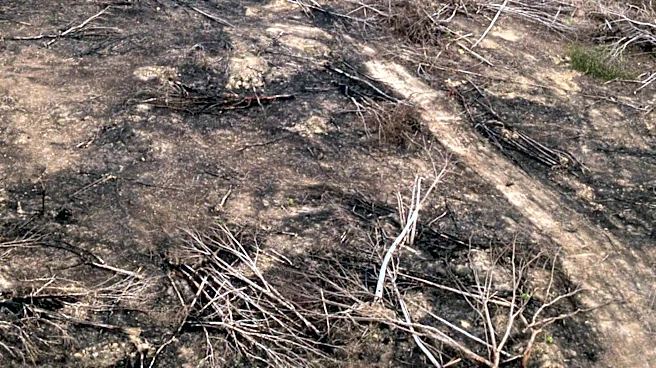
by widespread landslides and erosion caused by Hurricane Helene more than two years ago. Crews are utilizing helicopters and ground-based methods to spread over 20,000 pounds of specially formulated seed mixes. These mixes include native grasses, herbs, shrubs, and trees, alongside fast-growing cover crops. The primary targets for seeding are landslide areas and riparian zones where vegetation was stripped away, leaving bare rock and exposed soil. This project seeks to stabilize the soil, prevent further erosion, and deter the growth of invasive species.
Why It's Important?
This restoration project is crucial for the ecological health and resilience of Pisgah National Forest. The widespread landslides and erosion from Hurricane Helene have not only damaged the land itself but also pose significant threats to waterways and aquatic ecosystems. Sediment runoff, a direct consequence of erosion, can fill critical spaces in rivers, disrupting habitats for aquatic species. By stabilizing the soil with fast-growing cover crops and establishing native vegetation, the project aims to mitigate these impacts, protecting water quality and biodiversity. Furthermore, the initiative is designed to prevent invasive species from colonizing the disturbed areas, which could further degrade the native ecosystem. This proactive approach is vital for the long-term sustainability of the forest and its ability to support wildlife and natural processes.
What's Next?
Crews have begun dropping seeds in the affected areas of Pisgah National Forest, with the timing chosen to optimize conditions for vegetation establishment. The success of the project will depend on factors such as rainfall and temperatures. Following the initial seeding, crews plan to return to monitor the growth of the vegetation and assess the project's overall effectiveness. The goal is for the deep and strong root systems of the established species to stabilize landslide areas, prevent their expansion, and allow native flora to reclaim the damaged landscape over the next two to five years. Continued vigilance against invasive species will also be a key component of the ongoing restoration efforts.
Beyond the Headlines
The Pisgah National Forest restoration project highlights the increasing challenges faced by national forests due to extreme weather events, which are becoming more frequent and intense. It underscores the critical role of partnerships between government agencies like the U.S. Forest Service and non-profit organizations such as the National Forest Foundation in addressing large-scale environmental damage. This initiative also showcases a sophisticated approach to ecological restoration, utilizing tailored seed mixes and aerial deployment to cover vast, difficult-to-access terrains. Beyond the immediate environmental benefits, such projects contribute to the broader understanding of climate resilience and adaptive management strategies for natural resources, emphasizing the interconnectedness of land health, water quality, and biodiversity.