
What's Happening?
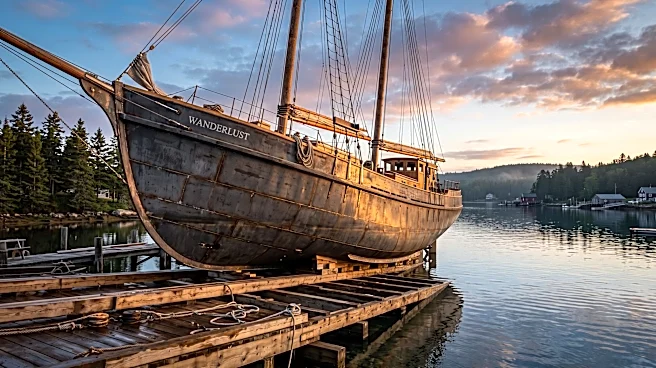
Residents of Freeport, Maine, will have the opportunity to vote in November on a citizens' ordinance that could allow Harold Arndt to launch his 80-ton homemade steel schooner, the 'Island Rover,' which
has been landlocked in his backyard for decades. Arndt, 83, has been in legal disputes with the town since 2004 over the launch of his vessel, which he built from recycled steel to make a statement about industrial waste. The Freeport Town Council recently declined to adopt the ordinance, instead sending it to a referendum. Arndt and his supporters now have until September 23 to collect 774 signatures from registered Freeport voters to secure a spot on the November ballot. This marks the second attempt to get the issue on the ballot, following a failed effort in June. If passed, the ordinance would permit the construction of a temporary ramp to launch the schooner from a waterfront property.
Why It's Important?
This local issue in Freeport, Maine, highlights a clash between individual property rights, environmental concerns, and community development. The prolonged legal battle and the need for a citizen-led referendum underscore the complexities of local governance and the challenges individuals face when undertaking large-scale projects that impact their communities. The situation also brings to light the changing demographics and values within coastal towns, where traditional maritime heritage may conflict with newer residents' environmental and aesthetic preferences. The outcome of the vote could set a precedent for how similar projects are handled in the future, potentially influencing local zoning laws and environmental regulations. It also reflects the power of community activism and the democratic process in resolving long-standing disputes, demonstrating how local voters can directly influence significant community decisions.
What's Next?
The immediate next step is for Harold Arndt and his supporters to gather the required 774 signatures by September 23 to ensure the ordinance appears on the November ballot. If enough signatures are collected, a public hearing will be held before the November vote, allowing residents to voice their opinions and concerns. The town manager is also seeking input from the State Department of Environmental Protection regarding whether the proposed ordinance would violate the Mandatory Shoreland Zoning Act if passed. Regardless of the vote's outcome, a lawsuit concerning the ownership of the 'Island Rover' is scheduled to go to trial in December, adding another layer of legal complexity to the situation. The results of the referendum will determine whether Arndt can proceed with his long-held dream of launching the schooner, or if the legal battles will continue.
Beyond the Headlines
This story delves into deeper themes of individual perseverance, the tension between tradition and progress, and the evolving identity of coastal communities. Arndt's decades-long dedication to building the 'Island Rover' and his unwavering commitment to launching it, despite numerous legal and community obstacles, exemplify extraordinary personal resolve. The conflict also reflects a broader societal shift where environmental protection and community aesthetics are increasingly prioritized, sometimes at the expense of individual projects or historical practices. The maritime lawyer representing Arndt suggests that the opposition stems from a 'not-in-my-backyard' mentality from newer, more affluent residents who may not appreciate Maine's shipbuilding heritage. This highlights the cultural friction that can arise when communities undergo gentrification, leading to differing visions for local development and preservation.