
What's Happening?
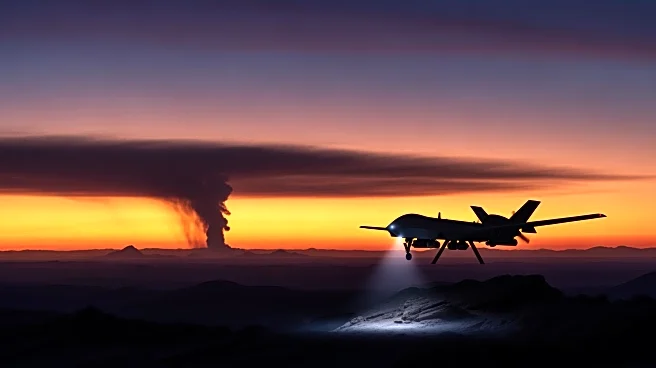
The United States military conducted a series of strikes in Syria targeting ISIS positions in response to an attack that resulted in the deaths of two American soldiers and a civilian interpreter. The operation,
named 'Operation Hawkeye,' involved hitting approximately 70 targets linked to ISIS, including infrastructure and weapons storage sites. This action follows a December 13 attack in Palmyra, Syria, where the two soldiers, Sgt. Edgar Brian Torres Tovar and Sgt. William Nathaniel Howard, were killed. The strikes were part of a broader effort to dismantle ISIS's remaining capabilities in the region. Defense Secretary Pete Hegseth described the strikes as a 'declaration of vengeance,' emphasizing the U.S. commitment to defending its personnel. The operation also involved partner nations, including Jordan, and was supported by intelligence gathered from previous operations.
Why It's Important?
The strikes underscore the ongoing U.S. military commitment to combating ISIS in Syria, a mission that has persisted since the mid-2010s when ISIS controlled significant territory in Syria and Iraq. The operation highlights the U.S. strategy of using targeted military actions to disrupt terrorist networks and prevent future attacks on American forces. The involvement of partner nations like Jordan indicates a collaborative international effort to stabilize the region. The strikes also reflect the U.S. administration's resolve to respond decisively to threats against its military personnel, reinforcing its stance on national security and counterterrorism.
What's Next?
The U.S. military is likely to continue its operations in Syria to further weaken ISIS's presence and capabilities. The focus will remain on gathering intelligence and conducting targeted strikes to prevent ISIS from regrouping. The situation may prompt further diplomatic engagements with regional partners to ensure a coordinated approach to security challenges. Additionally, the U.S. may face scrutiny over its military actions and their impact on the broader geopolitical dynamics in the Middle East. The response from the Syrian government and other regional actors will be crucial in shaping the future of U.S. involvement in the area.