







What's Happening?
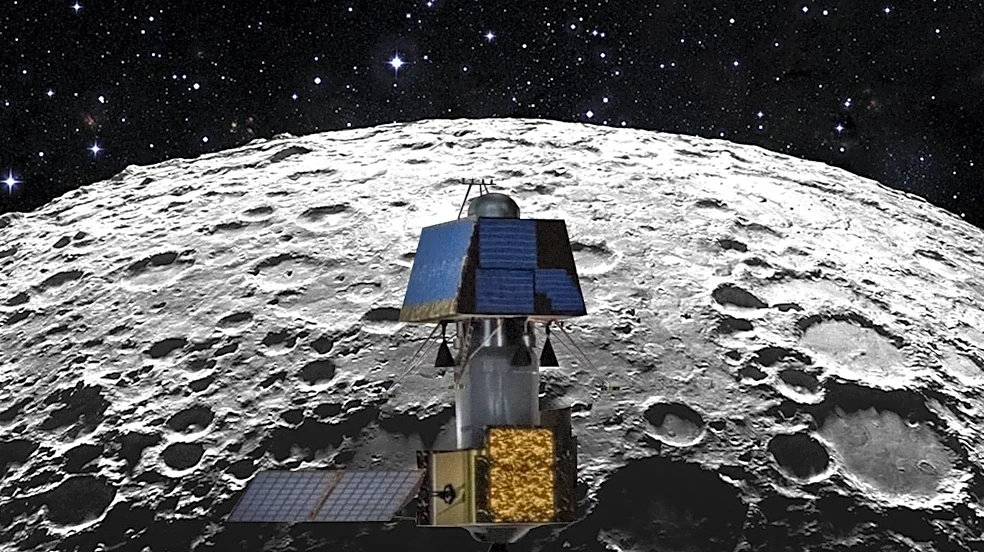
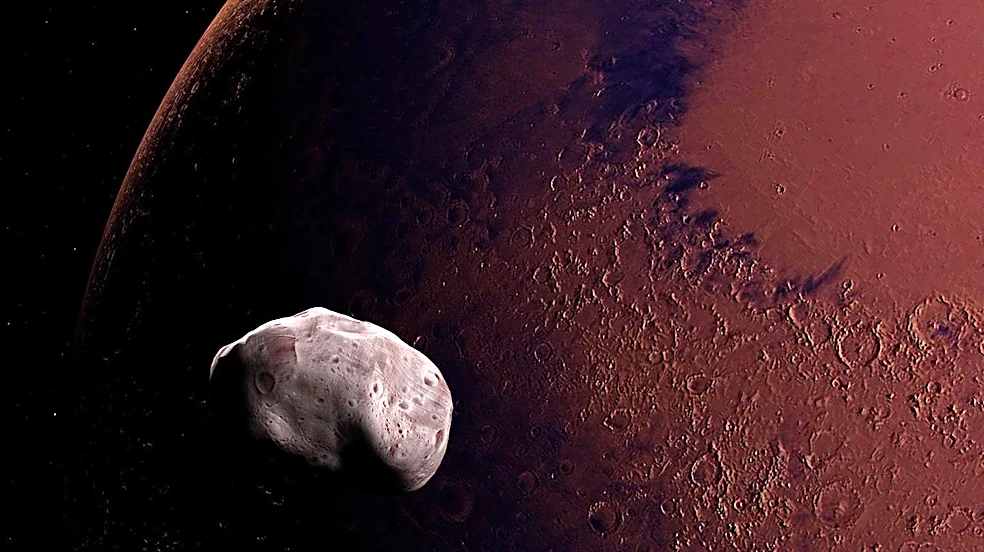
Japan's Martian Moons eXploration (MMX) mission is scheduled to launch on Monday, October 19, 2026, from Tanegashima, Japan. This ambitious mission aims to study Mars' two moons, Phobos and Deimos, and return samples from Phobos to Earth. The MMX spacecraft
will carry two NASA instruments: the MEGANE spectroscopy instrument from the Johns Hopkins Applied Physics Lab, designed to study Phobos from orbit, and the Pneumatic collection mechanism (P-Sampler) from Honeybee Robotics (part of Blue Origin), which will collect surface samples. The mission plans to arrive at Mars in August 2027, collect samples from Phobos by December 2028, and return them to Earth in 2031. This international collaboration highlights a significant step in understanding the origins of Mars' moons and the early solar system.
Why It's Important?
The MMX mission represents a critical international effort in space exploration, with significant implications for U.S. scientific research and technological development. NASA's involvement, through the provision of key instruments and scientific expertise, underscores the collaborative nature of modern space endeavors and allows the U.S. to gain valuable data and samples without bearing the full cost of the mission. The return of samples from Phobos could provide unprecedented insights into the formation of Mars' moons, potentially resolving the debate between the 'captured asteroid' and 'planetary impact' hypotheses. This data will enhance our understanding of planetary evolution and the conditions in the early solar system, directly benefiting U.S. planetary science. Furthermore, the technological advancements in sample collection and return, particularly the P-Sampler, will contribute to the U.S.'s capabilities for future deep-space missions, including those targeting asteroids and other celestial bodies. The mission also strengthens international partnerships, fostering global cooperation in scientific discovery.
What's Next?
Following its launch, the MMX mission will embark on a 10-month journey to Mars, with its arrival anticipated in August 2027. The spacecraft will then spend approximately three years studying Phobos and Deimos, deploying a rover, and conducting two sample collection landings on Phobos. The collected samples are expected to return to Earth in 2031, landing in Australia. Upon their return, NASA will receive at least 15% of the samples for analysis by U.S. scientists at the Johnson Space Center in Houston. This will initiate a new phase of laboratory research, where advanced analytical techniques will be applied to uncover the chemical and geological secrets of Phobos. The findings from these analyses will be crucial for refining planetary formation models and guiding future space exploration strategies. The mission's progress will be closely monitored by the international scientific community, with regular updates expected from JAXA and NASA.
Beyond the Headlines
The MMX mission's quest to understand the origins of Mars' moons delves into fundamental questions about the universe and our place within it. The two competing theories—whether Phobos and Deimos are captured asteroids or remnants of a massive impact—represent vastly different narratives of planetary history. Resolving this debate could reshape our understanding of how planets and their satellites form, offering insights that extend beyond Mars to other celestial bodies, including Earth's Moon. Ethically, the mission highlights the importance of international scientific collaboration in addressing grand challenges, fostering a shared sense of discovery and responsibility. The potential for finding Martian material on Phobos, ejected by ancient impacts, could also provide a unique window into Mars' geological past, potentially revealing clues about the conditions for life. This mission is not just about collecting rocks; it's about piecing together the cosmic puzzle of our solar system's evolution, inspiring future generations to look to the stars with renewed curiosity.