




What's Happening?
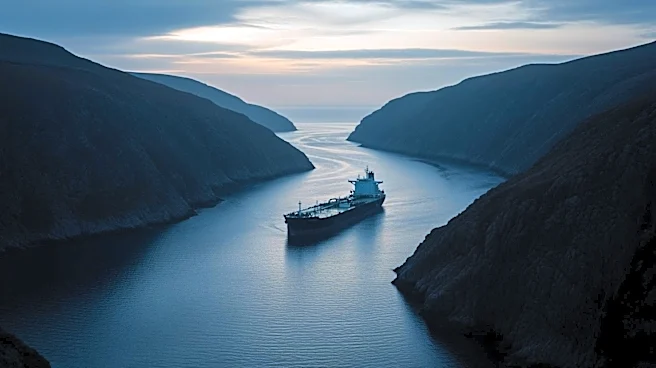
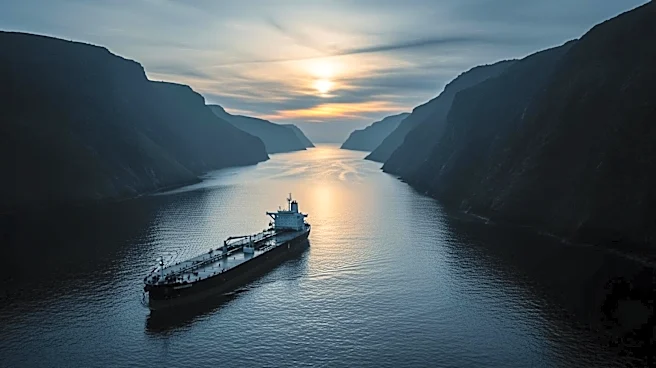
In February 2026, Iran closed the Strait of Hormuz, a critical chokepoint for global oil and gas supplies, causing significant disruptions. This move halted the flow of about 20 million barrels of oil per day and affected one-fifth of the global liquefied
natural gas trade. The closure also stranded a third of international fertilizer trade and blocked a significant portion of global helium production. Oil prices surged above $115 per barrel, and urea prices increased by 50%. The International Energy Agency described this as the largest supply disruption in the history of the global oil market. Despite the immediate strategic gains for Iran, the move has prompted countries like Japan, South Korea, and France to negotiate directly with Tehran for safe passage, highlighting Iran's temporary leverage.
Why It's Important?
The closure of the Strait of Hormuz by Iran has significant implications for global energy security and geopolitical stability. The strait is a vital route for oil and gas exports from the Gulf region, and its closure has exposed vulnerabilities in global energy supply chains. The disruption has accelerated efforts by countries to diversify energy sources and reduce dependence on the strait. The United States, for instance, is expanding its energy exports and pipeline infrastructure to bypass the strait. Additionally, there is a renewed push towards civilian nuclear energy in Europe and other regions to enhance energy independence. These developments could diminish Iran's strategic leverage over time, potentially reshaping global energy flows and alliances.
What's Next?
If current trends continue, the strategic importance of the Strait of Hormuz could decline within three to five years. Countries are investing in alternative energy routes and sources to mitigate the impact of such disruptions. The expansion of U.S. energy exports and pipeline infrastructure, along with increased investment in nuclear energy, are likely to reduce reliance on the strait. However, Iran's ability to impose transit fees and its broader economic challenges remain uncertain. The situation underscores the need for global energy stakeholders to adapt to changing geopolitical dynamics and ensure energy security.