




What's Happening?
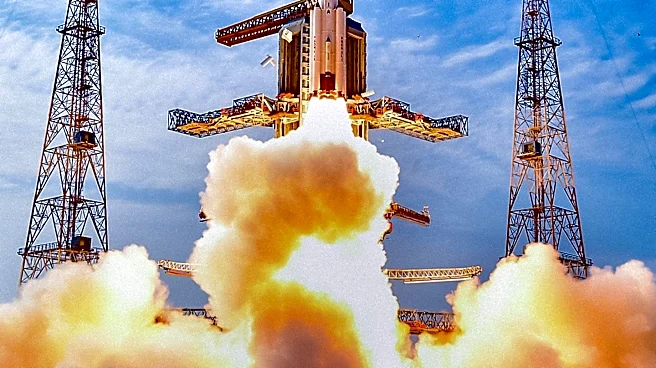
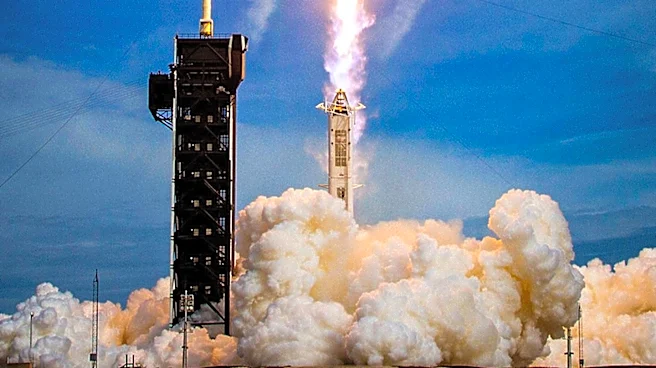
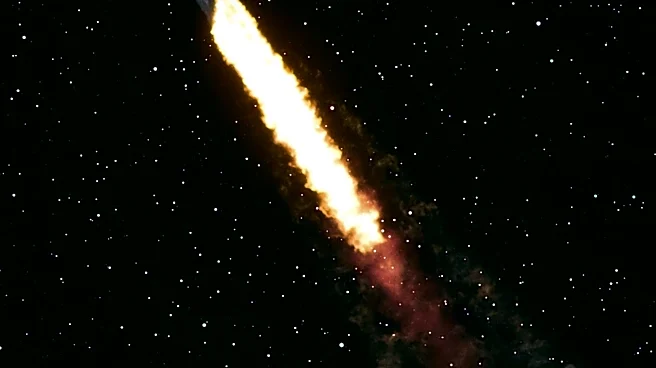
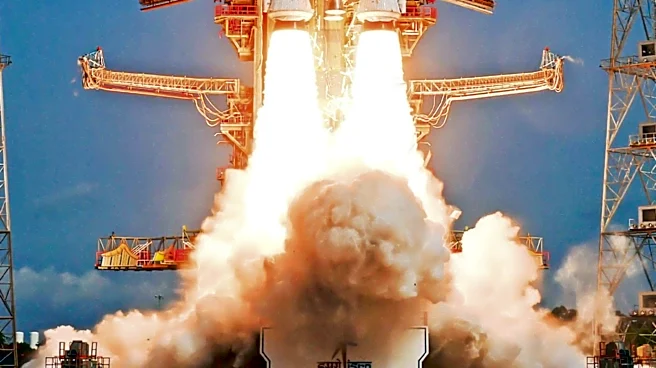
A Long March 7A rocket launched by the China Aerospace Science and Technology Corporation exploded 85 seconds after liftoff from the Wenchang Space Launch Site. The rocket was carrying the Zhongxing-4B communications satellite, intended for geostationary
transfer orbit. The explosion resulted in a complete loss of the vehicle and its payload. This incident marks the 18th mission of the Long March 7A series, which previously experienced a similar failure in 2020 due to an engine malfunction.
Why It's Important?
The failure of the Long March 7A rocket highlights potential vulnerabilities in China's space program, particularly concerning the reliability of its launch vehicles. The incident may impact China's ambitious space exploration and satellite deployment plans, as the Long March 7A is a key component of the country's space infrastructure. The explosion could lead to delays in future launches and necessitate a thorough investigation to identify and rectify the underlying issues. This event underscores the challenges faced by space agencies in ensuring the safety and success of their missions.
What's Next?
In the wake of the explosion, China's space agency is expected to conduct a detailed investigation to determine the cause of the failure. The findings could influence the design and operation of future Long March 7A missions. Additionally, the incident may prompt a review of safety protocols and engineering practices within China's space program. The outcome of the investigation will be crucial in restoring confidence in the Long March 7A series and ensuring the success of upcoming launches.