



What's Happening?
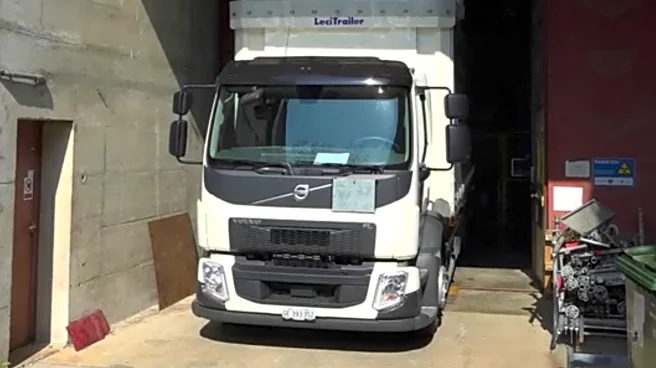
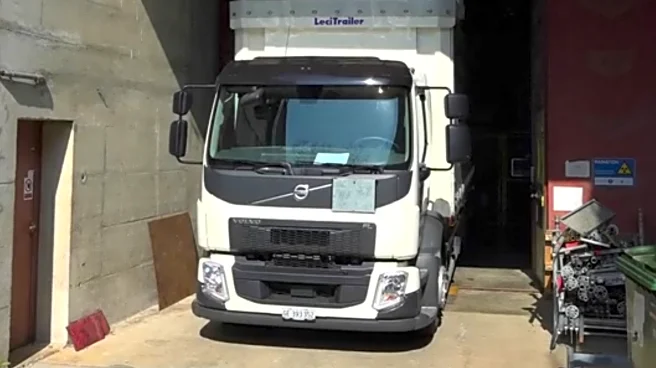
The BASE experiment at CERN has successfully transported a trap filled with antiprotons across the laboratory's main site, marking a significant achievement in antimatter research. This development is a crucial step towards delivering antimatter to other
European laboratories for high-precision experiments. Antimatter, which annihilates upon contact with matter, is challenging to preserve, making this transport a remarkable feat. The BASE collaboration aims to measure antiproton properties with unprecedented precision, which requires moving experiments away from CERN's 'antimatter factory' due to magnetic field fluctuations.
Why It's Important?
This breakthrough in transporting antimatter could revolutionize the study of fundamental physics by allowing more precise measurements of antiproton properties. Understanding these properties could provide insights into the matter-antimatter imbalance in the universe, a longstanding scientific mystery. The ability to transport antimatter safely opens new possibilities for collaborative research across Europe, potentially leading to significant advancements in particle physics. This achievement also demonstrates the potential for technological innovation in handling and studying antimatter.
What's Next?
The BASE collaboration plans to transport antiprotons to other laboratories, such as Heinrich Heine University Düsseldorf, for further experiments. The team is exploring solutions to maintain the necessary conditions for antiproton preservation during longer transports. Future research will focus on transferring antiprotons to experimental setups without loss, which remains a significant challenge. Success in these endeavors could lead to groundbreaking discoveries in particle physics and a deeper understanding of the universe's fundamental forces.