
What's Happening?
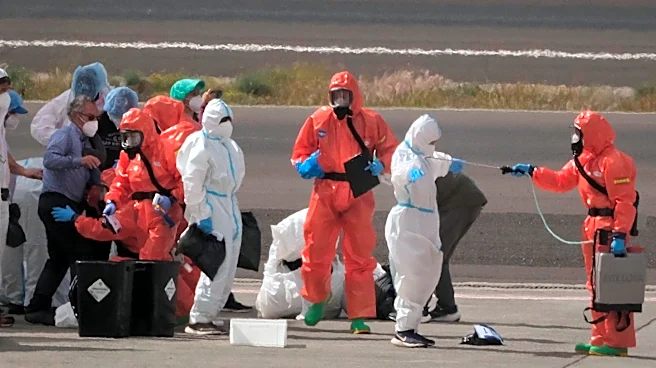
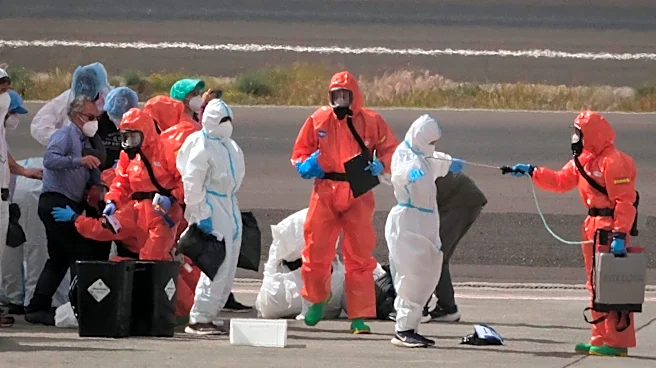
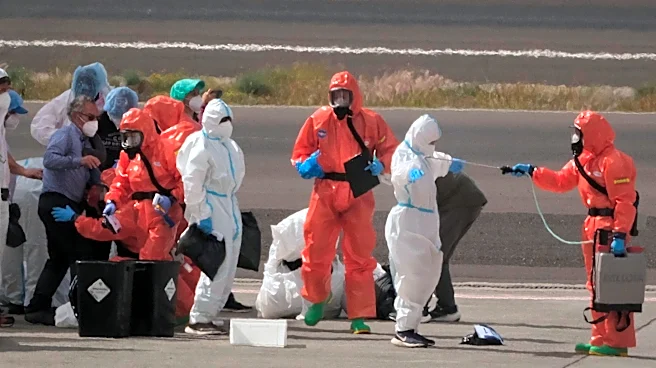
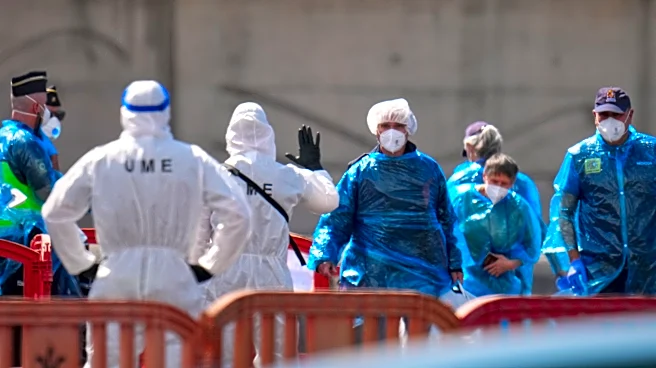
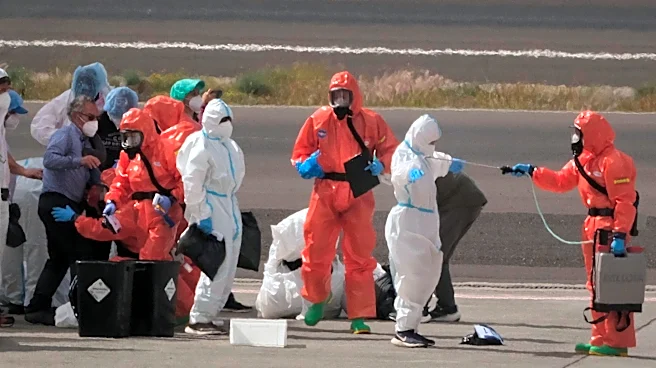
An American passenger aboard the MV Hondius cruise ship has tested positive for hantavirus following an outbreak on the vessel. The ship, which had been anchored in the Canary Islands, saw passengers evacuated
and repatriated to their home countries. The World Health Organization (WHO) confirmed this as the first-ever hantavirus outbreak on a cruise ship. The virus, typically spread through rodent droppings, has resulted in three deaths among passengers. Health officials emphasize that the risk to the general public remains low, although the Andes virus strain involved may rarely spread between humans. The American passenger, along with others, was flown to Nebraska for quarantine and monitoring. WHO has recommended close monitoring of all repatriated passengers.
Why It's Important?
The hantavirus outbreak on the MV Hondius highlights the challenges of managing infectious diseases in confined environments like cruise ships. This incident underscores the importance of rapid response and international cooperation in containing outbreaks. The potential for human-to-human transmission, although rare, raises concerns about the virus's spread beyond the initial outbreak. The situation also tests the preparedness of health systems to handle such cases, especially in the context of ongoing global health challenges. The outbreak's management could influence future protocols for cruise ship operations and international travel during health crises.
What's Next?
Countries involved in the repatriation are expected to continue monitoring the health of their citizens who were aboard the MV Hondius. The WHO will likely conduct further investigations to understand the outbreak's dynamics and prevent future occurrences. Health authorities may review and update guidelines for cruise ship operations to mitigate similar risks. The incident may prompt discussions on improving sanitation and health monitoring on cruise ships, potentially leading to stricter regulations and enhanced safety measures.