
What's Happening?
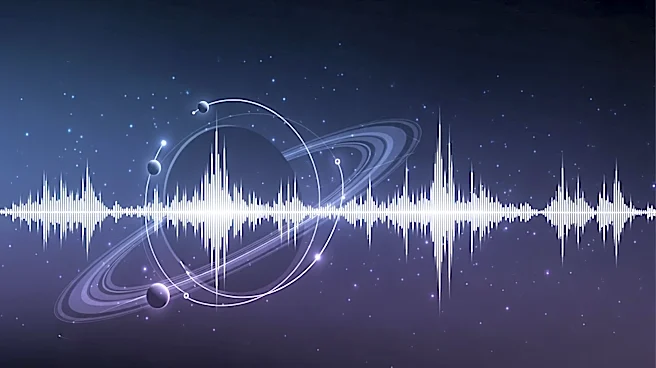
NASA has developed a sonification program that converts electromagnetic vibrations from space into audio, allowing the public to 'hear' planets like Saturn. This process involves translating radio waves,
plasma oscillations, and magnetic field fluctuations into sounds that are within the human hearing range. The sonification of Saturn, for instance, results in audio that resembles a haunting choir, due to the planet's magnetosphere producing data that, when shifted into the audible range, aligns with patterns sensitive to human auditory perception. This initiative is not just for public engagement but serves as a data-analysis tool, helping scientists, including those who are blind or have low vision, to detect structures in datasets that might be missed visually.
Why It's Important?
The sonification program is significant as it provides a novel way to analyze and interpret space data, making it accessible to a broader audience, including researchers with visual impairments. By converting complex data into audio, NASA enables a different form of data interaction, potentially leading to new discoveries. This method also enhances public interest and understanding of space exploration by providing an auditory experience of the universe. The haunting sounds of Saturn, for example, highlight the unique and often eerie nature of space phenomena, fostering a deeper appreciation and curiosity about the cosmos.
What's Next?
NASA's sonification efforts are expected to continue expanding, with more data from various space missions being converted into audio. This could lead to further advancements in data analysis techniques and public engagement strategies. As the program develops, it may inspire similar initiatives in other scientific fields, promoting inclusivity and innovation in data interpretation. Additionally, the ongoing release of these audio files will likely continue to captivate and educate the public, potentially influencing future generations of scientists and space enthusiasts.
Beyond the Headlines
The sonification of space data raises interesting questions about the nature of perception and the ways in which humans interpret the universe. By translating electromagnetic vibrations into sound, NASA challenges traditional notions of how space is experienced and understood. This approach underscores the importance of interdisciplinary collaboration, combining science, technology, and art to create new forms of knowledge and engagement. It also highlights the potential for technology to bridge gaps in accessibility, offering new opportunities for participation in scientific discovery.