





What's Happening?
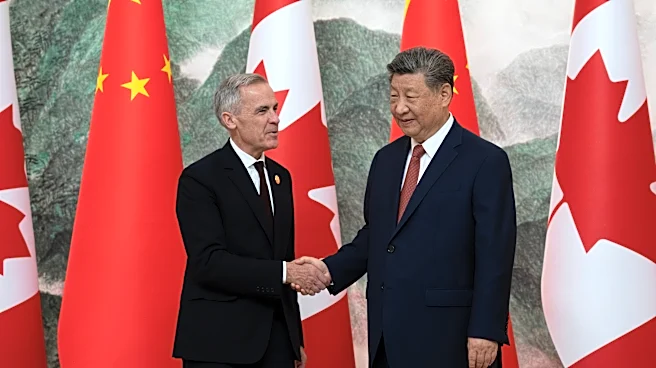
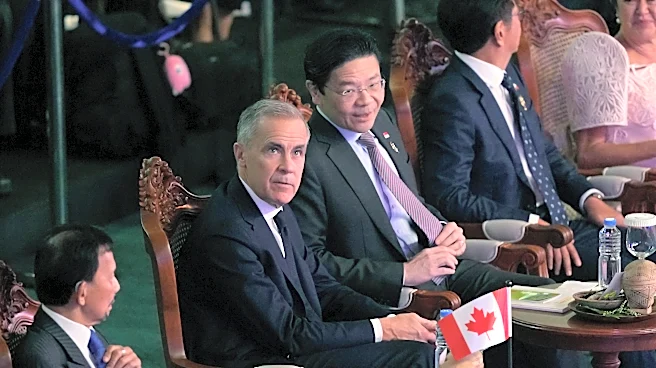
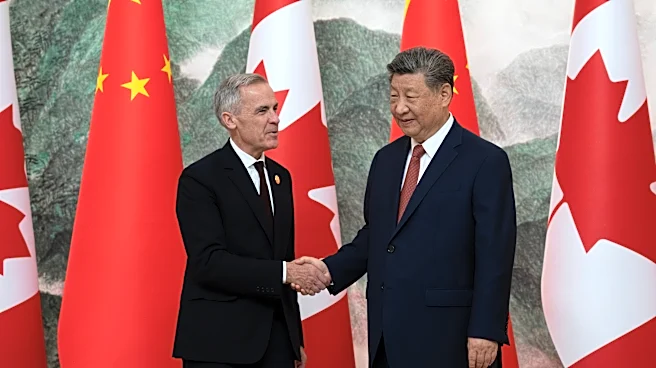
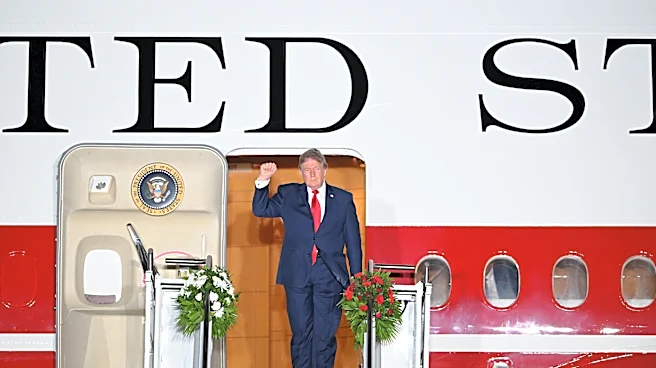
Prime Minister Mark Carney met with President Donald J. Trump on the sidelines of the Asia-Pacific Economic Cooperation (APEC) Economic Leaders’ Meeting in Shenzhen, China. The primary focus of their discussion was the ongoing efforts to achieve a mutually
beneficial trade agreement between their respective countries. Both leaders engaged in dialogue regarding the progress made and the work still required to finalize an agreement that aims to create employment opportunities, enhance affordability for consumers, and fully respect Canada’s linguistic diversity, cultural heritage, and national sovereignty. They concluded their meeting by agreeing to continue their collaborative efforts and maintain close communication to advance the trade negotiations.
Why It's Important?
This meeting underscores the continued importance of trade relations between the United States and Canada, two of the world's largest trading partners. The pursuit of a mutually beneficial trade agreement is critical for economic stability and growth in both nations. For the U.S., a stable trade relationship with Canada ensures continued access to key markets and resources, while for Canada, it is vital for its export-driven economy. The emphasis on creating good jobs and boosting affordability highlights the direct impact such an agreement would have on the citizens of both countries. Furthermore, the explicit mention of respecting Canada’s languages, culture, and sovereignty indicates the nuanced considerations involved in modern trade negotiations, moving beyond purely economic terms to encompass broader national interests and values.
What's Next?
Following this meeting, the leaders have committed to continuing their work and maintaining close contact, indicating that negotiations for the trade agreement will proceed. This suggests that technical teams and negotiators from both countries will likely intensify their discussions to resolve outstanding issues and finalize the terms of the agreement. Future interactions between Prime Minister Carney and President Trump, either in person or through diplomatic channels, can be expected as key milestones are reached or as new challenges emerge. The ultimate goal is the formal signing and ratification of a comprehensive trade agreement that addresses the economic and cultural priorities of both the United States and Canada, which will then lead to its implementation and impact on cross-border commerce.
Beyond the Headlines
The ongoing trade discussions between the U.S. and Canada, as highlighted by this meeting, reflect the complexities of managing economic partnerships between closely integrated nations. Beyond the immediate trade benefits, the successful negotiation of such an agreement can serve as a testament to the enduring diplomatic relationship between the two countries, even amidst potential disagreements. The focus on respecting national sovereignty and cultural identity within a trade framework sets a precedent for how international economic agreements can be crafted to be more inclusive and sensitive to diverse national characteristics. This approach could influence future bilateral and multilateral trade negotiations globally, promoting a model where economic integration is balanced with the preservation of unique national attributes. The outcome of these negotiations will also be closely watched by other nations seeking to balance economic liberalization with national interests.