










What's Happening?
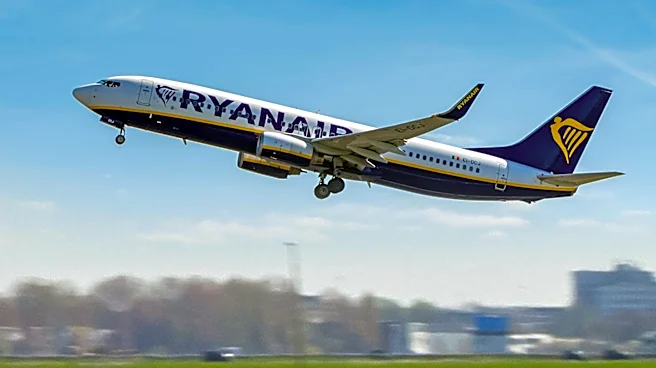
A Boeing 737 Max 8 operated by Ascend Airways experienced a slow and shallow take-off from London Luton Airport due to the crew's failure to update performance data after switching from a full-length runway take-off to an intersection departure. The Air Accidents
Investigation Branch found that the crew did not verify the revised V-speed data, resulting in a lower thrust setting than required. The aircraft lifted off just 162 meters from the runway end, crossing it at a height of 13 feet. Despite the incident, none of the 162 passengers and six crew members were injured.
Why It's Important?
This incident highlights the critical importance of accurate data entry and verification in flight operations, particularly when changes to take-off procedures occur. It underscores the need for rigorous training and adherence to protocols to ensure passenger safety. The event also raises questions about the adequacy of current safety checks and the potential need for enhanced oversight and training for flight crews to prevent similar occurrences in the future.
What's Next?
The investigation may lead to recommendations for changes in airline procedures and training programs to prevent similar incidents. Regulatory bodies might consider implementing stricter guidelines for data verification and management during flight operations. Airlines could also review their internal protocols to ensure compliance with safety standards and improve crew training on data management.