







What's Happening?
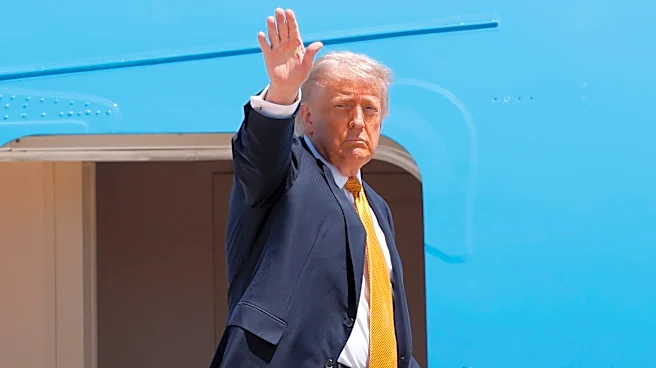
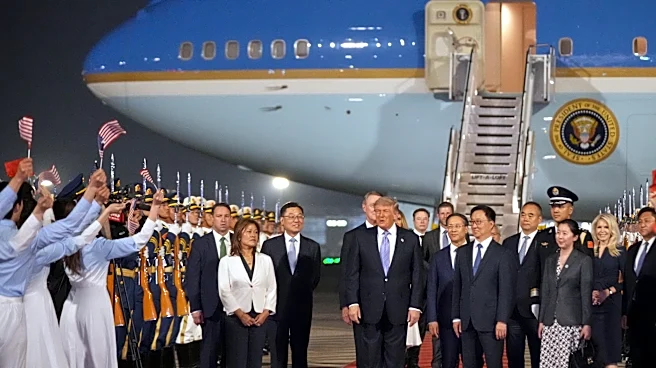
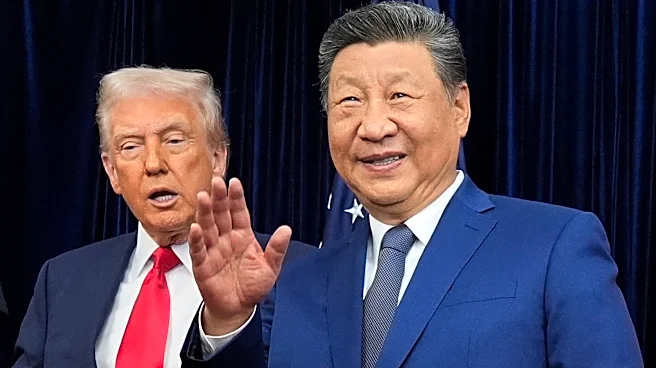
In a high-stakes summit in Beijing, President Trump and Chinese President Xi Jinping discussed key issues such as the war in Iran, Taiwan, and technological competition. The meeting, held at the Great Hall of the People, was marked by a formal welcome
ceremony. Xi Jinping urged for a partnership between the U.S. and China, warning against the 'Thucydides Trap,' which suggests conflict when a rising power challenges an established one. Trump responded positively, expressing his honor to be Xi's friend and predicting a stronger bilateral relationship. The summit included discussions on trade, with the U.S. seeking greater access to Chinese markets and China looking for relief from U.S. technology restrictions.
Why It's Important?
The summit is pivotal in addressing the strained relations between the U.S. and China, two of the world's largest economies. The discussions on Taiwan are particularly sensitive, as China's claims over the island conflict with U.S. support for Taiwan's autonomy. The trade talks are crucial for both economies, with potential impacts on global markets and industries. The presence of major U.S. business leaders underscores the economic stakes involved. The summit's outcomes could influence future trade policies, technology exchanges, and diplomatic relations, affecting global economic stability and geopolitical dynamics.
What's Next?
Post-summit, both nations are expected to engage in further negotiations to resolve trade disputes and address technology restrictions. The handling of Taiwan will continue to be a focal point, with potential diplomatic efforts to mitigate tensions. The U.S. may also seek China's cooperation in addressing the Iran conflict, leveraging its economic ties with Tehran. The outcomes of these discussions could shape the future trajectory of U.S.-China relations, impacting international trade, technology policies, and regional security.