



What's Happening?
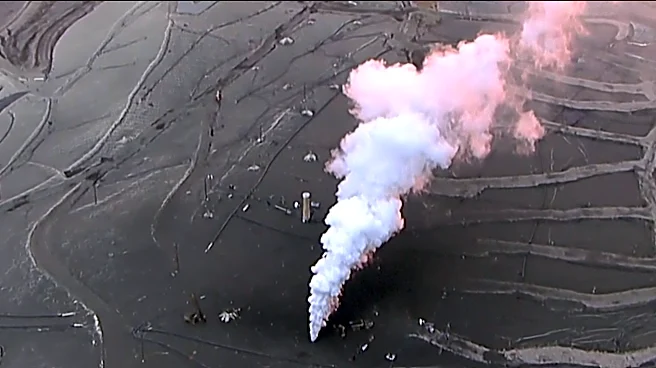
An explosive release of noxious gas and particulate material occurred at the shuttered Chiquita Canyon Landfill in Los Angeles County, leading to widespread fear and calls for a state of emergency from residents. The incident, which happened on a Monday
night, involved a geyser of trash and chemicals spewing from the landfill's underbelly, visible and detectable for miles. This event follows years of residents raising alarms about an underground garbage fire smoldering since at least 2022, releasing toxic fumes and effluent. Assemblymember Pilar Schiavo (D-Chatsworth) stated that the gas likely contained carcinogenic benzene and toxic hydrogen sulfide, both previously detected from the landfill's reaction area. The landfill operator, Texas-based Waste Connections, reported that the release occurred while drilling a new gas well to address elevated temperatures, encountering a pressurized pocket. Many residents in Val Verde and Castaic fled their homes, reporting health issues such as headaches, coughing, and dizziness. The South Coast Air Quality Management District received over 200 complaints and issued a violation notice to the landfill operators.
Why It's Important?
This incident at the Chiquita Canyon Landfill underscores a critical environmental and public health crisis in the Los Angeles area. The release of potentially carcinogenic and toxic gases like benzene and hydrogen sulfide poses immediate health risks to nearby communities, as evidenced by residents' reported symptoms and evacuations. The ongoing nature of the underground fire and chemical reactions, even after the landfill's closure, highlights systemic issues in waste management and environmental oversight. The lack of a state of emergency declaration, despite calls from residents and lawmakers, indicates a potential disconnect between community concerns and official responses. This event could lead to long-term health consequences for residents, including increased cancer risks and miscarriages, as suggested by Assemblymember Schiavo. It also raises questions about corporate accountability, regulatory effectiveness, and the adequacy of current monitoring and mitigation strategies for such environmental hazards.
What's Next?
Following the incident, L.A. County Supervisor Kathryn Barger introduced an emergency motion, which passed, requiring a full accounting from all county agencies regarding Monday's eruption and the immediate deployment of mental health services to affected communities. The landfill operator, Waste Connections, offered a free three-night hotel stay for a limited number of residents closest to the landfill, though this was criticized as insufficient given the prolonged nature of the issue. The state recently filed a lawsuit against the landfill owner and operator, alleging harmful health effects on the community, which Waste Connections has rejected. A state auditor previously found that the Los Angeles County Department of Public Health failed to consistently review air quality around the landfill and promptly alert residents. Future actions will likely involve continued legal battles, increased pressure for regulatory enforcement, and potentially more comprehensive long-term solutions for managing the landfill's ongoing chemical reactions and emissions. Residents are demanding a state of emergency declaration to ensure a more robust and coordinated response.
Beyond the Headlines
The Chiquita Canyon Landfill crisis reveals deeper implications regarding environmental justice and the disproportionate impact of industrial pollution on communities. The long-standing nature of the problem, with residents raising alarms for years, suggests a failure of regulatory bodies to adequately protect vulnerable populations. The incident highlights the complex interplay between corporate interests, local governance, and public health, where economic considerations can sometimes overshadow environmental safety. The concept of a 'cocktail of chemicals' affecting residents, even if individual levels don't exceed 'unsafe' thresholds, points to the limitations of current regulatory frameworks that often assess single contaminants rather than cumulative exposures. This event could serve as a catalyst for broader policy changes in landfill management, environmental monitoring, and emergency response protocols, particularly in areas where waste facilities are located near residential communities. It also underscores the importance of community activism in holding authorities and corporations accountable for environmental stewardship.