



What's Happening?
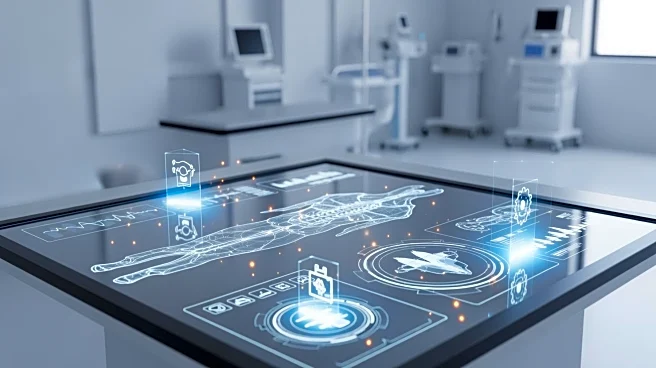
Medical training is increasingly incorporating interactive, digitally-powered learning tools to enhance student engagement and diagnostic skills. Studies have shown that such tools significantly improve students' ability to interpret medical data and make
accurate diagnoses. For instance, third-year medical students improved their diagnostic accuracy in chest radiography from 34.5% to 72.7% after two weeks of image-based e-learning. These tools are designed to complement traditional educational methods, providing a more engaging and effective learning experience.
Why It's Important?
The integration of interactive learning tools in medical education is crucial as it addresses the limitations of traditional memorization-based methods. By fostering critical thinking and practical application, these tools prepare students for real-world medical scenarios, potentially reducing diagnostic errors and improving patient outcomes. This shift is particularly important in a field where accurate and timely diagnoses can significantly impact patient care and treatment success.
What's Next?
As digital tools become more prevalent in medical education, institutions may continue to expand their use, integrating them into more courses and training programs. This could lead to a broader transformation in how medical professionals are trained, with a greater emphasis on interactive and practical learning experiences. The ongoing development of these tools will likely focus on enhancing their effectiveness and accessibility, ensuring that all students can benefit from these advanced educational resources.