





What's Happening?
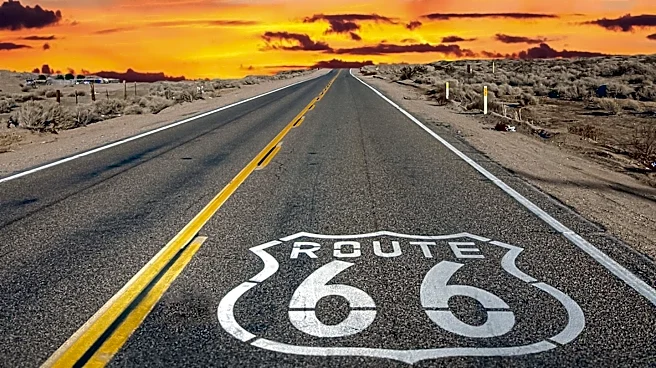
The centennial of Route 66 and the 90th anniversary of 'The Green Book' are prompting reflections on African American travel experiences during segregation. Route 66, established on November 11, 1926, stretched over 2,000 miles from Chicago to Los Angeles
and became a crucial artery for migration, including for Black individuals seeking opportunities away from the Jim Crow South. However, this freedom of the open road was often fraught with danger due to de facto segregation and 'sundown towns.' 'The Green Book,' first published by Harlem postman Victor Green, served as a vital directory for Black travelers, listing safe places to eat, sleep, and rest. Flagstaff, Arizona, was a significant 'Green Book' oasis, drawing Black families for lumber jobs, and its listings provided safety for travelers. While Route 66 was decommissioned in 1985 and 'The Green Book' ceased publication in 1966 after the Civil Rights Act, the legacy of these challenges persists, with Black drivers still facing disproportionate police stops.
Why It's Important?
The dual anniversaries of Route 66 and 'The Green Book' are important for understanding the historical context of racial discrimination in the U.S. and the resilience of African Americans. Route 66, often romanticized, reveals a darker side of American history where basic freedoms were denied based on race. 'The Green Book' stands as a testament to the ingenuity and necessity of creating parallel systems to navigate systemic oppression. The story of Flagstaff highlights how economic opportunities, like those in the lumber industry, created communities that became safe havens. This historical perspective is crucial for recognizing the long-term impacts of segregation on American society, including ongoing disparities in experiences like police interactions. It underscores that while legal segregation ended, its social and cultural echoes continue to shape contemporary issues of race and equality.
What's Next?
Efforts are underway to preserve and highlight 'Green Book' sites, such as Flagstaff's 'Green Book Tour,' which aims to educate the public about these historical landmarks. This initiative, championed by figures like former Flagstaff Mayor Coral Evans, seeks to ensure that the stories of African American travelers and their struggles for freedom are not forgotten. The ongoing discussions about disproportionate police stops for Black drivers indicate that while the overt segregation of the past is gone, challenges to equitable treatment on the road remain. Future initiatives may focus on further historical preservation, educational programs, and continued advocacy for racial justice to address contemporary issues rooted in this historical context. The continued remembrance of 'The Green Book' serves as a reminder of the progress made and the work that still needs to be done to achieve true equality.
Beyond the Headlines
The narrative surrounding Route 66 and 'The Green Book' extends beyond historical facts to touch upon deeper themes of American identity, freedom, and systemic injustice. The romanticized image of Route 66 often overlooks the harsh realities faced by Black travelers, revealing a selective memory in national storytelling. 'The Green Book' symbolizes not just a guide, but a form of resistance and self-determination in the face of oppression. The experiences of families drawn to places like Flagstaff for economic opportunity, only to encounter segregation, highlight the pervasive nature of racial barriers. This historical context provides a critical lens through which to view contemporary issues of racial inequality, demonstrating how past injustices continue to influence present-day social structures and individual experiences. It prompts a re-evaluation of what 'freedom' truly means in a society still grappling with its racial past.