








What's Happening?
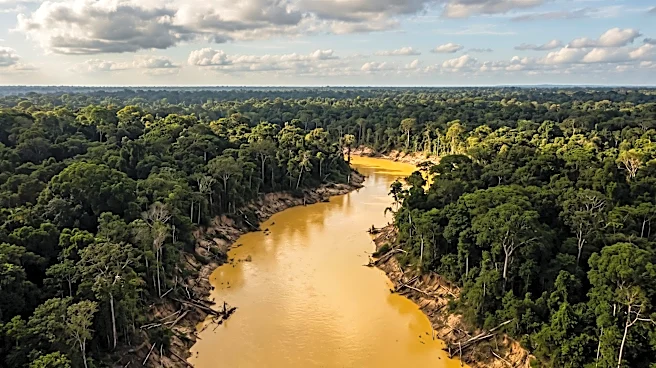
Bolivia's environmental court, the Tribunal Agroambiental, has mandated that the government present a comprehensive plan within 10 days to address areas damaged by gold mining. This order specifically targets the Madidi, Madre de Dios, and Tuichi rivers
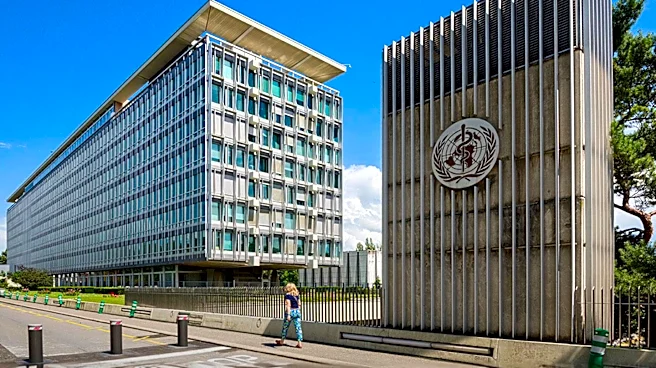
located in the northern Amazon region of Bolivia. The court's president, Roxana Chávez Rodas, explained that the plan must be implemented within 15 days of its presentation. Additionally, the court has frozen the processing and granting of new mining contract applications in these affected zones. The state mining authority has been given 60 days to inspect existing gold operations and suspend those operating without an environmental license. This ruling follows a study that revealed alarming mercury levels in women residing in the Beni river basin, with averages up to 5.5 parts per million, significantly exceeding the World Health Organization's limit of 1 part per million.
Why It's Important?
This court order is a significant development for environmental protection and public health in Bolivia, particularly for indigenous communities in the Amazon. The high mercury levels found in the Beni river basin highlight a severe public health crisis, with potential long-term neurological damage and increased mortality rates among affected populations. The freeze on new mining contracts and the requirement for existing operations to possess environmental licenses could lead to a reduction in mercury pollution and a more sustainable approach to resource extraction. This action underscores the critical role of judicial bodies in holding governments accountable for environmental stewardship and protecting vulnerable communities from industrial impacts. The ruling could set a precedent for stricter environmental regulations and enforcement in other mining regions, potentially influencing international standards for responsible mining practices.
What's Next?
The immediate next step involves the Bolivian government, specifically the Ministries of Defence, Government, Mining and Metallurgy, and Development Planning and Environment, along with the protected-areas service, presenting their intervention plan within 10 days of notification. Following this, the plan must be put into action within 15 days. The state mining authority, AJAM, will conduct a 60-day review of all gold operations with valid rights, suspending those lacking environmental licenses. The court also ordered the Health Ministry, National Statistics Institute, and public universities to assess indigenous communities exposed to mercury, with mobile medical teams to be deployed within 10 working days. The effectiveness of these measures will depend on the government's compliance and the enforcement of the court's directives, particularly given past instances where similar orders have not been fully implemented.
Beyond the Headlines
The court's ruling extends beyond immediate environmental and health concerns, touching upon deeper issues of indigenous rights, corporate accountability, and the long-term sustainability of resource-dependent economies. The documented health toll on communities like the Esse Ejja, who rely on the rivers for sustenance, highlights the disproportionate impact of environmental degradation on marginalized populations. The presence of large dredging boats, locally known as 'Chinese dragons,' suggests potential international involvement in the mining sector, raising questions about global supply chains and the responsibility of foreign entities. This case could serve as a critical test for Bolivia's legal framework in balancing economic development with environmental protection and human rights, potentially influencing future policy decisions regarding resource extraction and indigenous land rights.