







What's Happening?
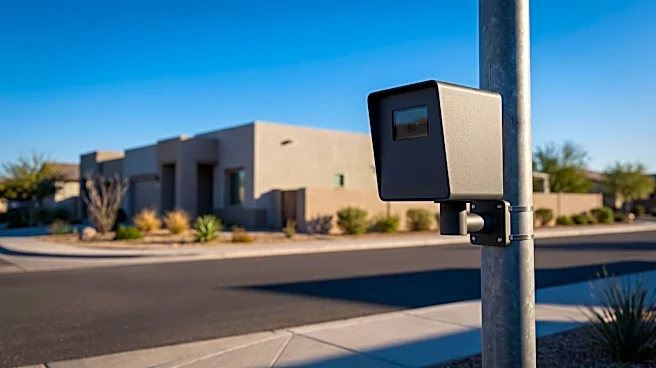
Several cities in Arizona are re-evaluating or terminating their contracts for automated license plate readers (Flock cameras) due to growing public privacy concerns and reports of internal misuse. Nearly a dozen Arizona cities have already ended their contracts with
Flock Safety. Protesters in Casa Grande are actively pushing back against the continued use of these cameras, advocating for stricter guidelines and independent audits. The debate centers on the balance between the cameras' crime-solving capabilities and potential privacy violations. Officers in Chandler and Apache Junction have reportedly resigned after being accused of using the cameras for personal reasons, prompting police departments to emphasize accountability for misuse. Queen Creek has taken a proactive step by implementing legal guardrails, making the misuse of Flock data, such as stalking or harassment, punishable by up to six months in jail and a $2,500 fine.
Why It's Important?
This development is important as it highlights a growing tension between public safety and individual privacy rights in the context of advancing surveillance technology. The pushback from citizens and the subsequent actions by city councils and police departments in Arizona could set a precedent for how other U.S. municipalities manage similar technologies. The implementation of legal guardrails, like those in Queen Creek, demonstrates an attempt to address privacy concerns while still leveraging technology for law enforcement. However, the demand for independent audits, as voiced by protesters in Casa Grande, underscores a lack of public trust in internal oversight mechanisms. This situation could influence policy discussions nationwide regarding data governance, accountability in law enforcement technology use, and the balance of power between government surveillance and civil liberties.
What's Next?
The Casa Grande City Council recently met to discuss its Flock cameras, though no final decisions or changes were made during that meeting. This indicates ongoing deliberation and potential future policy adjustments in Casa Grande. Other Arizona cities still utilizing Flock cameras are likely to face continued public scrutiny and pressure to implement stricter oversight or consider contract termination. The actions taken by Queen Creek, establishing legal penalties for misuse, may serve as a model for other jurisdictions looking to mitigate privacy risks. The debate is expected to continue, with protesters advocating for measures such as requiring warrants for data searches, similar to protections for phone records. Police departments will likely continue to emphasize internal audits, but the demand for independent oversight will persist.
Beyond the Headlines
The debate surrounding Flock cameras in Arizona touches upon deeper societal implications concerning the normalization of mass surveillance. While proponents highlight the technology's effectiveness in solving crimes, critics argue that the widespread collection of license plate data, even without direct suspicion, constitutes a form of mass surveillance that erodes privacy and civil liberties. The alleged misuse of these cameras by officers for personal reasons raises ethical questions about the power entrusted to law enforcement and the potential for abuse when robust oversight is lacking. This situation could contribute to a broader national conversation about the ethical deployment of AI-powered surveillance technologies, the need for transparent data handling policies, and the establishment of clear legal frameworks to protect citizens' rights in an increasingly monitored society. The outcome in Arizona could influence public perception and legislative efforts regarding surveillance technologies across the U.S.