






What's Happening?
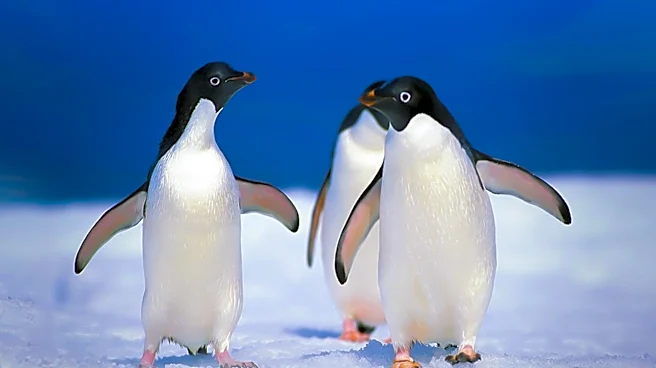
NASA scientists have discovered that the diet of Adélie penguins in Antarctica is closely linked to sea ice conditions. Using satellite images from Landsat, researchers analyzed the color of penguin guano, which varies based on diet. Penguins consuming
krill produce pink guano, while those eating more fish have different colored droppings. The study found that in areas with less sea ice, penguins tend to have a krill-rich diet, whereas in regions with more sea ice, they consume more fish. This dietary variation is significant as it affects penguin population health and growth. The research highlights the impact of environmental changes on Antarctic ecosystems.
Why It's Important?
The findings underscore the critical role of sea ice in the Antarctic marine ecosystem and its influence on the food web. As climate change continues to affect sea ice levels, the dietary habits of penguins and other marine species may shift, potentially impacting their survival and reproduction rates. This research provides valuable insights into how environmental changes can alter the balance of ecosystems, which is crucial for developing conservation strategies. Understanding these dynamics is essential for predicting the future of Antarctic wildlife and for informing policy decisions related to climate change and marine resource management.
What's Next?
Researchers are developing computer models to continue monitoring penguin diets using data from newer Landsat satellites. These models will help track how penguin populations respond to ongoing environmental changes, such as decreasing sea ice levels. The study also raises concerns about the increasing demand for krill, driven by fishing and recovering populations of other predators like seals and whales. This could lead to competition for resources, further affecting penguin populations. Continued research and monitoring are necessary to assess the long-term impacts of these changes and to guide conservation efforts.