



What's Happening?
Australia has reaffirmed its commitment to supporting its critical mineral supply chains despite the U.S. stepping back from plans to guarantee a minimum price for such projects. The U.S. decision, communicated by the Trump administration, has led to a decline
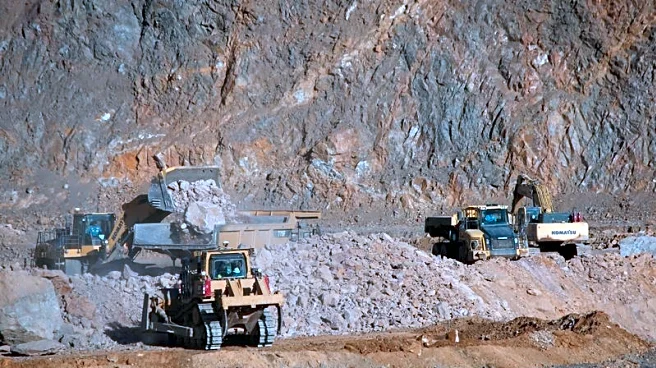
in shares of Australian rare earth miners. However, Australia's Resources Minister Madeleine King stated that this will not deter the country's strategic reserve program, which aims to establish a A$1.2 billion stockpile of critical minerals like antimony, gallium, and rare earth elements. This initiative is part of Australia's broader strategy to position itself as a key player in the global critical minerals market, particularly as an alternative to China.
Why It's Important?
Australia's strategic focus on critical minerals is crucial for its economic positioning and national security. By establishing a strategic reserve, Australia aims to mitigate supply chain disruptions and reduce dependency on China, the world's largest producer of these minerals. This move is significant for industries such as automotive and defense, which rely heavily on these resources. The U.S. policy shift highlights the complexities of international trade and economic policies, but Australia's steadfast approach underscores its determination to secure its place in the global market. This strategy could influence other countries to adopt similar measures, potentially reshaping global supply chains.
What's Next?
Australia plans to continue developing its critical minerals strategy, with the stockpile expected to be ready by the second half of 2026. The government is also considering setting a price floor to support local projects, which could involve offtake agreements to ensure taxpayer value. As Australia advances its plans, it may seek to strengthen partnerships with other countries and companies interested in diversifying their supply chains. The ongoing developments will be closely watched by industry stakeholders and policymakers, as they could have significant implications for global trade dynamics and resource security.