



What's Happening?
Researchers at the Fred Hutch Cancer Center have made a significant breakthrough in the fight against the Epstein-Barr virus (EBV), which affects approximately 95% of the global population and is linked to various cancers and neurodegenerative diseases.
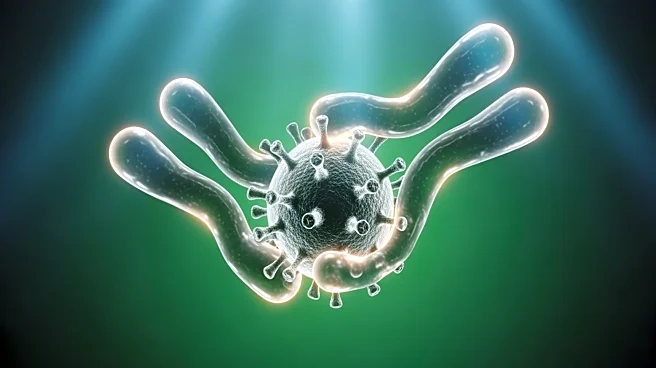
The team has developed new monoclonal antibodies that prevent the virus from attaching to and entering human immune cells. These findings, published in Cell Reports Medicine, demonstrate that one of these antibodies can completely prevent EBV infection in mice engineered to have human-like immune systems. The research focused on two viral proteins, gp350 and gp42, which are crucial for the virus's ability to attach to and enter human cells. The study identified antibodies targeting these proteins, with one gp42-targeting antibody fully blocking EBV infection.
Why It's Important?
This development is particularly significant for transplant patients, who are at high risk of EBV-related complications due to the immunosuppressive drugs they must take. These drugs can allow EBV to reactivate, leading to post-transplant lymphoproliferative disorders (PTLD), a serious condition that can result in lymphoma. The new antibodies could potentially prevent EBV infection or reactivation, reducing the incidence of PTLD and improving patient outcomes. This advancement addresses a critical unmet need in transplant medicine, offering a potential new therapy to protect vulnerable patients from EBV-related complications.
What's Next?
The research team is working with collaborators and an industry partner to advance these findings towards clinical application. The next steps include safety testing in healthy adults, followed by clinical trials in high-risk patients. The goal is to develop a preventive antibody therapy that could be administered to transplant patients to block EBV infection and prevent related complications. Fred Hutch has filed intellectual property claims related to the discovered antibodies, indicating a commitment to bringing this potential therapy to market.