

What's Happening?
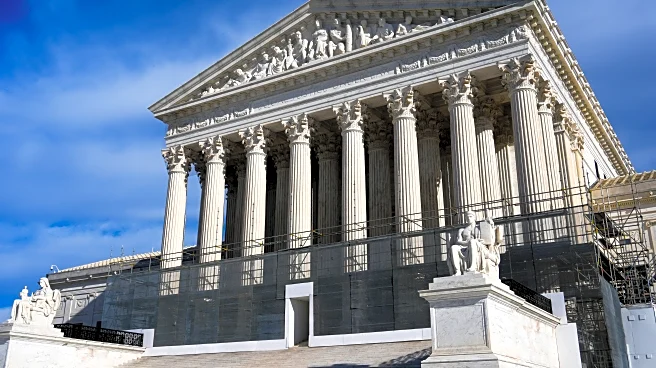
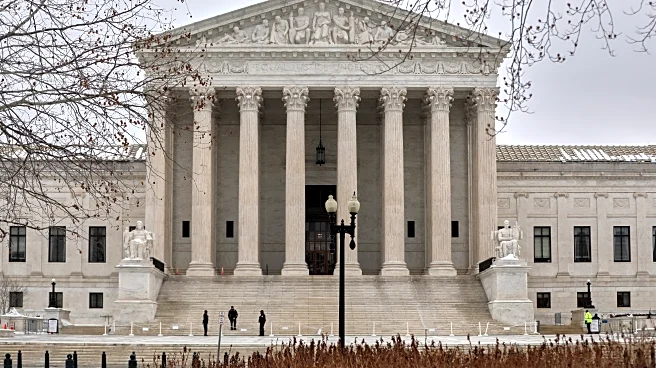
The Supreme Court has struck down President Trump's tariffs, creating new uncertainties in U.S.-China trade relations. The ruling challenges the tariffs that were initially imposed by Trump as a measure against China's trade practices. Analysts suggest
that while the decision might seem to favor China, Beijing is likely to proceed cautiously to maintain a fragile trade truce. The U.S. Trade Representative is investigating China's compliance with a previous trade agreement, which could lead to new tariffs if China is found non-compliant. Chinese Embassy spokesperson Liu Pengyu emphasized the need for cooperation between the two nations to ensure stability in economic and trade relations.
Why It's Important?
The court's decision introduces potential volatility in international trade, affecting not only U.S.-China relations but also other global trading partners. The ruling could impact industries reliant on stable trade agreements, potentially leading to economic disruptions. The U.S. administration may need to devise new strategies to address trade imbalances and unfair practices, as suggested by Rep. Ro Khanna. The outcome of this situation could influence global economic stability and the strategic positioning of the U.S. and China in international markets.
What's Next?
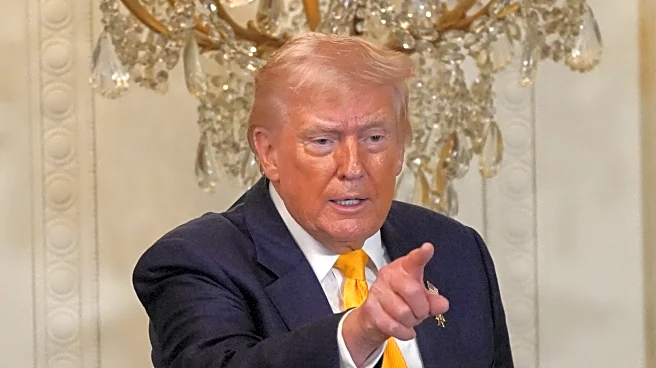
The U.S. administration might quickly implement alternative measures, such as imposing new tariffs if China is found non-compliant with trade agreements. President Trump's upcoming visit to China could be pivotal in shaping future trade policies. Both nations are expected to engage in negotiations to prevent further escalation and maintain economic stability. The international community will be closely monitoring these developments, especially countries with existing trade agreements with the U.S. and China.