
What's Happening?
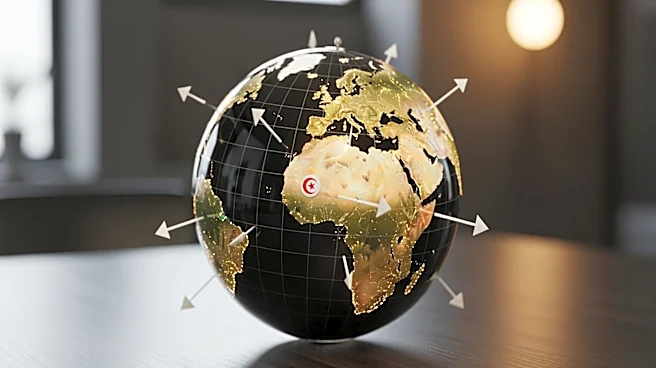
The Eurasian Economic Union (EAEU), led by Russia and including Belarus, Kazakhstan, Armenia, and Kyrgyzstan, is preparing to initiate negotiations for a free trade agreement with Tunisia. This move is part
of the EAEU's broader strategy to expand its global trade footprint, particularly in Africa. The proposed talks are expected to receive support at the upcoming Supreme Eurasian Council meeting. Tunisia's strategic location between the Mediterranean Sea and the Sahara Desert makes it an attractive partner for foreign trade, offering access to both European and Sub-Saharan African markets. The country's diversified economy, which includes agriculture, manufacturing, tourism, mining, energy, and technology, further enhances its appeal. Trade between Tunisia and Russia has been growing, with significant increases in Russian exports of wheat, barley, and other products, while Tunisia has expanded its exports of olive oil, seafood, and dates to Russia.
Why It's Important?
The potential free trade agreement between the EAEU and Tunisia highlights the increasing geopolitical and economic competition for influence in Africa. As global trade alliances shift, the EAEU's focus on Africa underscores the continent's growing importance in international trade dynamics. For Tunisia, aligning with the EAEU could bolster its economic ties and provide new market opportunities, particularly in Russia. This development could also influence Tunisia's relationships with other global powers, as it navigates its position in the evolving trade landscape. The agreement could lead to increased economic activity and investment in Tunisia, potentially boosting its economy and creating jobs.
What's Next?
If the negotiations proceed as expected, Tunisia could see a significant increase in trade and investment from EAEU member countries. This may lead to enhanced economic cooperation and development projects in various sectors, including agriculture, energy, and technology. The agreement could also prompt other global powers to strengthen their economic ties with Tunisia, leading to a more competitive environment for trade partnerships. Observers will be watching the Supreme Eurasian Council meeting closely for any announcements regarding the initiation of formal talks.