



What's Happening?
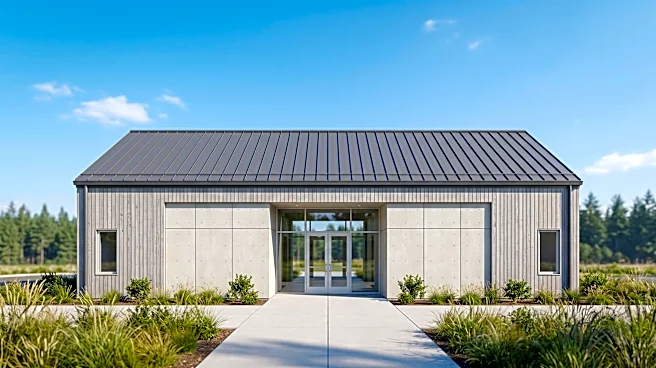
Congressman Rick Larsen, alongside Senator Maria Cantwell, has secured a $1 million federal grant to fund the construction of the Lopez Food Center in Western Washington. This 6,000 square-foot facility, currently under construction on Lopez Island, aims
to bolster the island's agricultural economy and address food insecurity. The center will feature farm stands, storage facilities, a commercial kitchen, business incubation spaces, and job training programs. The Lopez Food Share, which currently serves over 1,100 low-income adults and children in San Juan County monthly, expects to double its capacity with the new facility, allowing for expanded prepared-food offerings and hot meals. The project is designed to connect local farms, workers, and families, creating new opportunities within the island's food economy.
Why It's Important?
This federal investment is crucial for strengthening local food systems and addressing food insecurity in rural communities like Lopez Island. By providing infrastructure such as commercial kitchens and business incubation spaces, the Lopez Food Center will empower local farmers and food businesses, enabling them to access markets more directly and efficiently. This initiative also tackles the challenge of food deserts and limited access to fresh, healthy food for vulnerable populations. The projected doubling of capacity for the Lopez Food Share highlights a significant step towards alleviating hunger and improving nutritional outcomes for over 2,200 individuals in San Juan County. Furthermore, the creation of job training programs within the center will foster economic development and create new employment opportunities, contributing to the overall resilience and sustainability of the island's economy.
What's Next?
With the federal funding secured and construction underway, the next phase will involve the completion of the Lopez Food Center and its operational launch. This will entail equipping the facility with necessary infrastructure, establishing partnerships with local farmers and food businesses, and developing the various programs, including job training and expanded food services. The community can anticipate increased access to locally sourced produce and prepared meals, as well as new avenues for agricultural entrepreneurship. The success of this project could serve as a model for other rural communities facing similar challenges in food security and economic development, potentially inspiring further federal and local investments in localized food systems across the U.S.
Beyond the Headlines
The Lopez Food Center project represents a broader shift towards recognizing the importance of localized food systems for both economic stability and community well-being. Beyond its immediate benefits of food access and economic opportunity, the center fosters a sense of community resilience by reducing reliance on external supply chains and promoting sustainable agricultural practices. It also highlights the critical role of federal grants in catalyzing grassroots initiatives that address complex social and economic issues at a local level. This investment underscores a growing understanding that food security is not just about availability but also about accessibility, affordability, and the creation of robust local economies that support both producers and consumers.