







What's Happening?
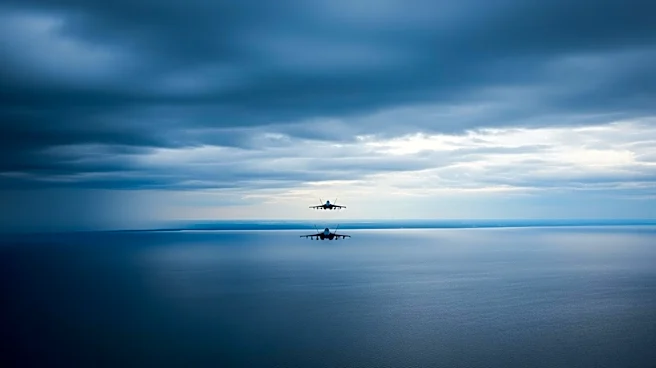
NATO forces intercepted Russian military aircraft, including strategic bombers and fighter jets, flying over the Baltic Sea. The interception involved French Rafale fighters from a Lithuanian air base, part of NATO's air-policing mission. The Russian aircraft, comprising
two Tu-22M3 bombers and about ten SU-30 and SU-35 fighters, were on a scheduled flight over neutral waters, according to the Russian Defense Ministry. This incident is part of routine NATO operations to monitor Russian flights near its airspace, which often occur without transponders or flight plans. The interception highlights ongoing military tensions in the region, with NATO regularly responding to Russian air activities.
Why It's Important?
The interception underscores the persistent military tensions between NATO and Russia, particularly in the Baltic region. Such incidents are significant as they reflect the strategic importance of the Baltic Sea and the ongoing vigilance required by NATO to maintain airspace security. The frequent encounters between NATO and Russian aircraft can escalate tensions, impacting diplomatic relations and regional stability. For NATO, these operations are crucial in demonstrating its commitment to protecting member states and deterring potential aggression. The situation also highlights the broader geopolitical dynamics at play, with Russia's military activities being closely monitored by Western alliances.
What's Next?
Continued vigilance and readiness by NATO forces are expected as they monitor Russian military activities in the region. Future interceptions are likely as Russia maintains its strategic flights over the Baltic Sea. Diplomatic channels may be engaged to address the underlying tensions, although military readiness will remain a priority for NATO. The situation could influence NATO's strategic planning and resource allocation in Eastern Europe, potentially leading to increased military presence or exercises in the region to deter further provocations.