

What's Happening?
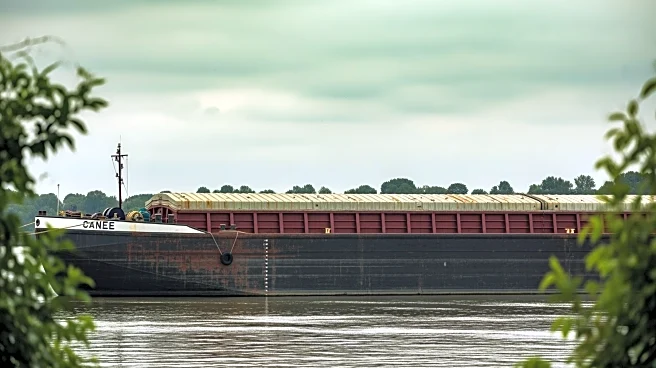
Indigenous protesters and environmental activists in Brazil have intensified their opposition to government projects that they believe threaten the Amazonian rivers and rainforest. On February 19, approximately 400 activists intercepted a grain barge
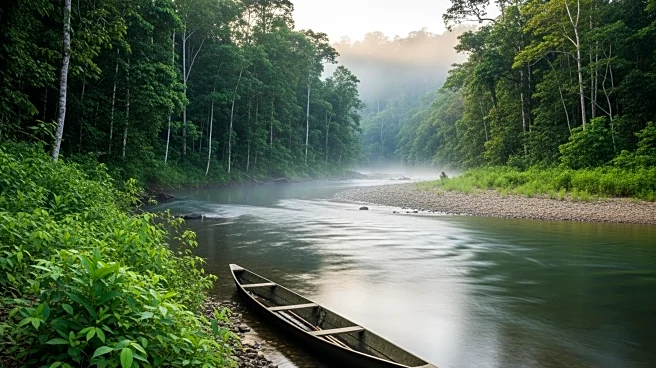
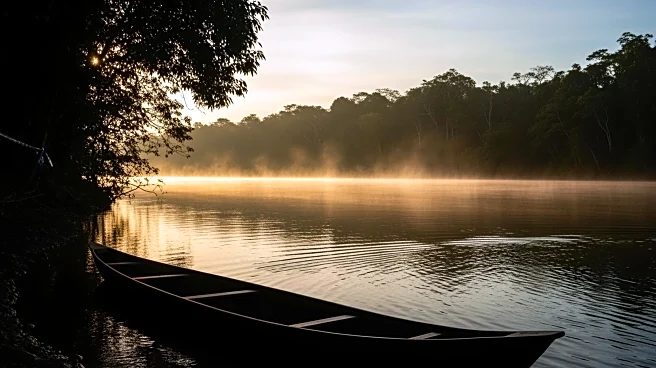
at Cargill's terminal in Santarém, Brazil. The protesters, arriving in boats, managed to board the barge and inscribe messages such as 'The Tapajós River isn’t for sale' and 'Revoke the Decree of Death.' This action is part of a broader protest against a federal decree that included the Madeira, Tapajós, and Tocantins Rivers in Brazil’s National Privatization Program. The activists are demanding the annulment of plans to dredge the Tapajós River, which they argue will have detrimental effects on the ecosystem. The protest coincided with a Brazilian court order for the government to remove protesters who have been blocking Cargill’s terminal for two weeks.
Why It's Important?
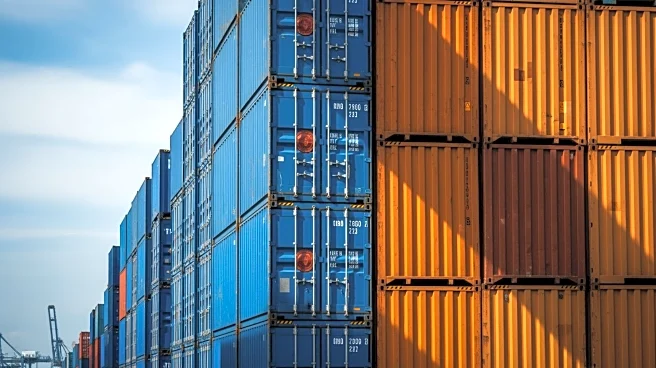
The protest at Cargill's terminal underscores the tension between economic development and environmental preservation in Brazil. The dredging project is part of a larger initiative to transform Amazonian rivers into industrial export corridors for soy and corn, driven by agribusiness and global commodity traders. Critics argue that this could exacerbate deforestation, threaten biodiversity, and undermine Brazil's climate commitments. The project is seen as a catalyst for increased land speculation, soy expansion, and potential violence along transport routes. As Brazil is the world's largest soybean exporter, with China as a major buyer, the outcome of these protests could have significant implications for global agricultural markets and environmental policies.
What's Next?
The ongoing protests and legal challenges suggest a protracted conflict over the future of the Amazonian rivers. The Brazilian government may face increasing pressure from both domestic and international environmental groups to reconsider its privatization and development plans. The situation could lead to further legal battles and potential policy shifts, especially if the protests gain more international attention. The outcome will likely influence Brazil's environmental and economic strategies, as well as its relationships with major trading partners.
Beyond the Headlines
The protest highlights deeper issues of indigenous rights and environmental justice in Brazil. The indigenous communities view the government's projects as a threat to their traditional territories and way of life. This conflict reflects broader global challenges of balancing economic growth with sustainable development and respecting indigenous sovereignty. The situation in Brazil could serve as a case study for other countries facing similar dilemmas, potentially influencing international environmental and human rights policies.