









What's Happening?
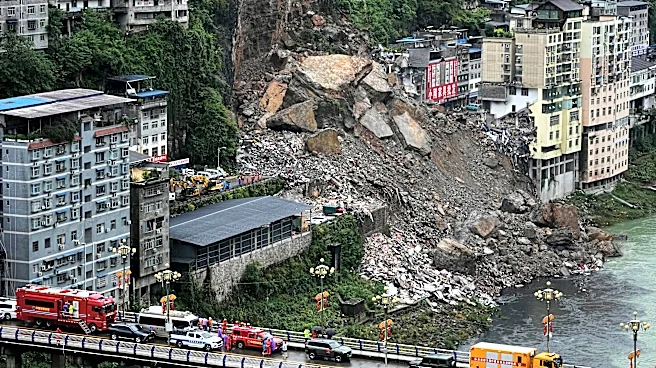
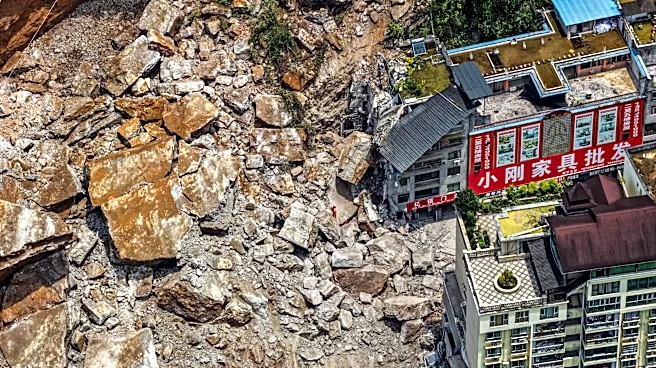
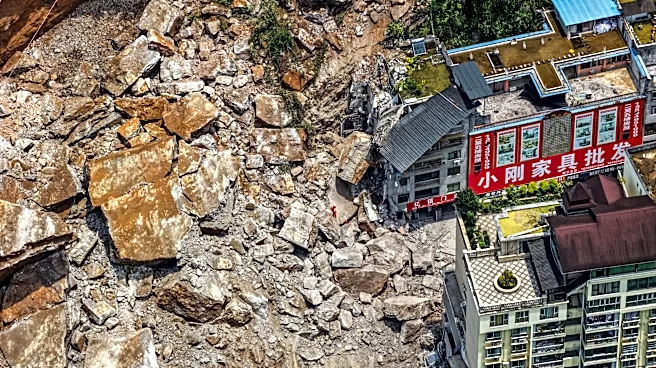
A significant landslide occurred on the outskirts of Chongqing, China, resulting in at least eight fatalities and 34 individuals reported missing. The landslide, which took place in Pengshui County, buried over ten residential buildings and necessitated
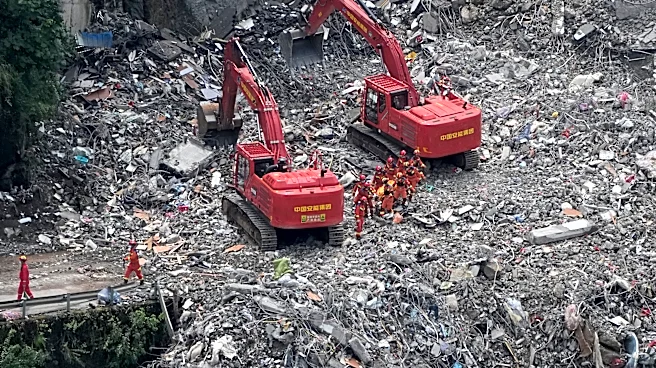
the evacuation of more than 1,100 people. The disaster involved approximately 18,000 cubic meters of rocks and debris, with the largest rock measuring around 3,000 cubic meters. Rescue operations are ongoing, with over 800 personnel on site, but efforts are hampered by unstable terrain and the risk of further landslides. Chinese President Xi Jinping has called for an investigation into the cause of the landslide.
Why It's Important?
The landslide highlights the vulnerability of certain regions in China to natural disasters, particularly in areas with steep terrain and heavy rainfall. The incident underscores the need for improved disaster preparedness and response strategies in such regions. The loss of life and displacement of residents also draw attention to the broader implications of environmental management and urban planning in rapidly developing areas. The event may prompt Chinese authorities to reassess safety measures and infrastructure resilience in similar regions to prevent future tragedies.
What's Next?
Authorities are likely to continue rescue and recovery operations while assessing the stability of the surrounding area to prevent further incidents. An investigation into the landslide's cause will be conducted, potentially leading to policy changes or infrastructure improvements. The Chinese government may also increase efforts to provide aid and support to affected families, including temporary housing and essential supplies. The incident could lead to a broader review of disaster management practices across the country.